NFL Previews
  MLB Previews
  NBA Previews
  NHL Previews
  Soccer Previews
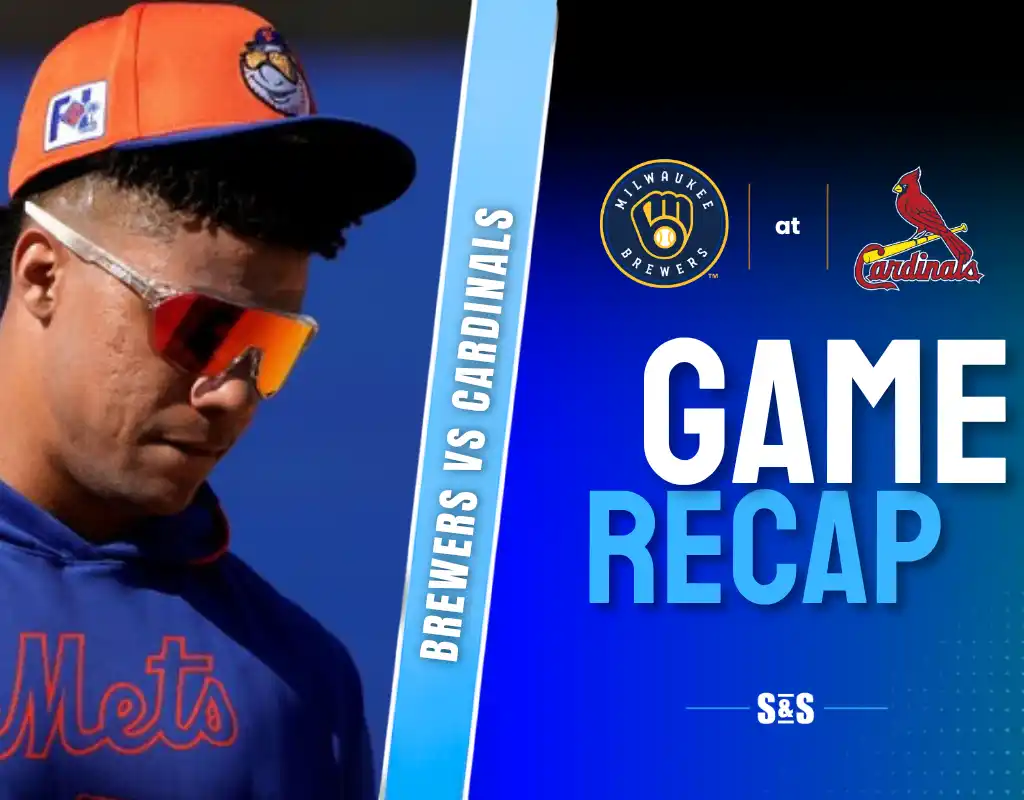

Table of Contents
The Brewers vs Cardinals recap delivered exactly what the original preview asked Milwaukee backers to believe: the better full-game team could still justify a road favorite price if the market did not push too far. Milwaukee beat St. Louis 8-4 at Busch Stadium, cashing the Brewers moneyline and turning a cautious -136 best-bet recommendation into a winning ticket.
This was never framed as a blind favorite spot. The preview was clear that Milwaukee had the stronger bullpen base, the deeper full-game profile, and the better overall team case, but Logan Henderson’s return from the injured list and Andre Pallante’s ability to give St. Louis length made the price important. Bettors using the MLB preview board had to decide whether Milwaukee was still playable as a road favorite or whether the number had already taxed the edge.
The final score answered that cleanly. Brewers moneyline bettors were rewarded, Brewers run-line backers cashed because Milwaukee won by four, and over bettors were on the right side once Jake Bauers’ three-run homer helped push Milwaukee to a 6-0 lead by the third inning. Cardinals underdog backers had one brief window after Jordan Walker’s three-run homer cut the margin to 6-4, but Milwaukee’s offense and late-game structure closed the door.












Go Inside the Handicappers’ Playbook
All in one spot. Real-time line moves, sharp reads, and verified edges.
Milwaukee Brewers vs St. Louis Cardinals Game Recap
| Game Detail | Result |
|---|---|
| Final Score | Milwaukee Brewers 8, St. Louis Cardinals 4 |
| Matchup | Milwaukee Brewers at St. Louis Cardinals |
| Ballpark | Busch Stadium |
| Starting Pitchers | Logan Henderson vs Andre Pallante |
| Key Betting Result | Brewers moneyline cashed as the road favorite |
| Best Market Result | Brewers moneyline, Brewers run line, and over 8.5 |
Milwaukee did not make bettors wait long to see whether the favorite price had enough room. The Brewers jumped in front early, built a 6-0 lead by the third inning, and forced St. Louis into a chase script before the Cardinals could settle into the kind of underdog game the preview warned about. That mattered because the Cardinals’ best path depended on Pallante giving them length, keeping traffic under control, and letting the home lineup find one or two leverage spots.
Instead, Milwaukee created the leverage first. Bauers became the swing point of the game, first helping ignite the offense and then delivering the three-run homer that stretched the margin. That one swing did more than pad the box score. It changed the entire betting shape. A road favorite at -136 can survive a tight game, but it becomes much more attractive when it creates early distance and removes the home underdog’s ability to dictate pace.
The preview’s main caution was Henderson’s workload. He had not started since May 22, so the Brewers’ edge had to be viewed through a full-game lens rather than a pure first-five innings bet. That was exactly how the result played out. Henderson gave Milwaukee enough early run prevention to support the lead, but the bullpen still had to absorb pressure after Walker’s three-run homer made the game 6-4. Bettors who understood market discipline had the right read: this was not simply Henderson vs Pallante. It was Milwaukee’s total roster edge against St. Louis’ ability to keep the margin close.
The Cardinals did make the game uncomfortable. Walker’s homer was the kind of swing that keeps home underdogs alive and reminds bettors why laying road chalk in a division game is never automatic. At 6-4, Milwaukee backers had to confront the exact counterargument from the preview: Pallante’s length, St. Louis’ contact bats, and the possibility that one inning could pull the Cardinals back into the number.
Milwaukee answered like a favorite that deserved the ticket. Turang’s solo homer in the seventh restored separation, and Contreras’ late run-scoring contribution gave the Brewers more breathing room. That sequence mattered for run-line bettors as much as moneyline bettors. The Brewers did not just survive after Walker’s homer. They scored again, protected the lead, and turned a potentially nervous favorite result into a four-run win.
From a betting standpoint, this Brewers vs Cardinals recap is a clean example of a price-sensitive favorite delivering. The preview did not tell bettors to chase Milwaukee at any number. It said the Brewers were playable at -136 or better and that the edge would thin if the market moved toward -145 or worse. The final score validates that exact framing. Milwaukee was the right side, but the number still mattered.
Key Stats That Explain the Betting Result
The key betting stat was Milwaukee’s early six-run cushion. A 6-0 lead by the third inning changed everything. It cashed the preview’s full-game logic, put pressure on the Cardinals’ underdog case, and moved the total into a much different position than it held before first pitch. Once the Brewers built that kind of lead, St. Louis needed not just offense, but sustained run prevention and another major swing.
Milwaukee’s 11-hit attack also explains why the favorite ticket was stronger than a one-inning fluke. Five Brewers had two hits, which points to lineup balance rather than one player carrying the entire result. Bauers supplied the loudest moment, but the offense did not disappear around him. That is important for bettors reviewing postgame betting takeaways, because a road favorite becomes more trustworthy when the scoring is supported by multiple bats instead of one isolated homer.
Henderson’s 5 1/3 innings mattered because the preview’s biggest concern was workload. He struck out four and allowed three runs, which is not a dominant shutdown line, but it was enough with Milwaukee’s early offense. The handicap was never that Henderson had to throw seven scoreless innings. It was that he had the better strikeout-and-WHIP profile, and if he gave Milwaukee a usable bridge, the Brewers’ stronger full-game structure could carry the moneyline.
Walker’s three-run homer was the Cardinals’ most important betting moment. It turned a 6-1 type of game into a 6-4 contest and briefly made St. Louis +1.5 backers think the back door might be open. But the Cardinals did not get the next step. They did not tie the game, did not keep the deficit at one, and did not stop Milwaukee from adding insurance. That is why the homer mattered but did not flip the result.
Betting Market Results
| Market | Result and Betting Takeaway |
|---|---|
| Brewers Moneyline -136 | Won; Milwaukee justified the road favorite price |
| Cardinals Moneyline +113 | Lost; the home underdog rally was not enough |
| Brewers -1.5 Run Line +124 | Won; Milwaukee’s four-run margin rewarded plus-money run-line bettors |
| Cardinals +1.5 Run Line -149 | Lost; St. Louis could not keep the favorite inside the number |
| Total 8.5 | Over won; the 12-run final cleared the listed total |
The betting board rewarded the preview’s main call. Milwaukee moneyline was the best bet at -136 or better, and the Brewers won 8-4. That is the clean part. The sharper part is that the result also explains why the preview was cautious about chasing the price. Milwaukee was the right team, but the edge depended on getting a playable number before the market taxed the favorite too heavily.
For bettors using sportsbook comparison, the difference between -136 and a more expensive number matters. A four-run final makes the ticket look easy after the fact, but pregame the case included Henderson’s layoff and Pallante’s ability to work deep. This is why the best version of the bet was not “Milwaukee at any cost.” It was Milwaukee at the right cost.
The total result was just as instructive. The preview treated 8.5 as efficient, not as a clear over or under. The game still went over because Milwaukee’s early offense forced St. Louis into a chase and Walker supplied one big answer. Once the score reached 6-4, the over was positioned well, and Milwaukee’s insurance runs finished it. Bettors comparing market structure through sportsbook operations context should note how quickly a balanced total can tilt when the road favorite creates early margin.
Game Analysis: Why Milwaukee’s Full-Game Edge Held Up
The biggest reason Milwaukee’s full-game edge held up is that the Brewers did not need every part of the preview to be perfect. Henderson did not need to be stretched into a long ace-level outing. The bullpen did not need a stress-free night. The offense did not need to win with only one narrow rally. Milwaukee had enough paths to cover for a few imperfections, and that is exactly what a favorite bettor should want when laying a road price.
The handicap centered on team quality, bullpen depth, and lineup flexibility. Those are not flashy talking points, but they are the kind that win full-game moneyline bets. Milwaukee’s early offense gave Henderson room. Henderson gave the Brewers a usable start. The bullpen had to deal with the Walker homer but did not allow the entire lead to disappear. Then the lineup added late separation. That is a connected game script, not a one-note favorite win.
St. Louis had the counterpunch that made the game interesting. Walker’s homer showed why the Cardinals were not a throwaway home underdog, and it supported the preview’s warning that the Brewers run line was not the safest angle before first pitch. But a live underdog path is not the same as a winning underdog result. The Cardinals needed another inning of damage after the homer, and Milwaukee’s insurance scoring made that much harder.
This is where bettors should separate outcome from process. The Brewers run line won, but the preview correctly called the moneyline the cleaner angle. That distinction matters. A run-line ticket cashed because Milwaukee added insurance and won by four. The stronger pregame process was still the moneyline because it did not require margin. Anyone studying handicapper evaluation should care about that difference. A bet can win without being the best pregame risk profile.
Why Brewers Moneyline Bettors Had the Right Side
Brewers moneyline bettors had the right side because Milwaukee’s advantages were spread across more than one lane. Henderson had the better swing-and-miss profile than Pallante, but the play was not dependent on Henderson dominating for seven innings. Milwaukee’s lineup had more ways to create pressure, and the Brewers’ bullpen profile gave the full-game bet more support than a first-five-only approach.
That balance showed up after the Cardinals cut the deficit to 6-4. A weaker favorite might have stalled there, turned the game into a bullpen coin flip, and made every late plate appearance feel like a threat to the ticket. Milwaukee answered with more offense. Turang’s homer changed the late innings from survival mode back into control mode, and that is why the moneyline never became a pure sweat after the Cardinals’ biggest swing.
The preview’s best-bet language also deserves credit because it respected price. Milwaukee was playable at -136 or better. Pass territory began if the line climbed too much. That is the correct way to handle a road favorite with a better roster but a few situational questions. The betting process is not about finding the most likely winner and ignoring the number. It is about finding the most likely winner at a number that still pays fairly for the risk.
Why the Over Became the Stronger Live Script
The total at 8.5 was not treated as a major pregame edge, and that was fair. Busch Stadium was not automatically a launching pad, Henderson had strikeout upside, and Pallante’s length could have supported a more controlled scoring environment. But once Milwaukee reached six runs by the third, the total stopped being about the original balance and became about game state.
St. Louis had to chase. That matters in baseball betting because chase games create different bullpen decisions, different pitch pressure, and different plate-appearance urgency. The Cardinals’ big swing came from Walker, and suddenly the over had a direct path. Milwaukee did not need another huge inning after that. It only needed insurance, and the Brewers got it.
The important lesson is not that every Milwaukee game should be played over. That is the lazy read. The sharper read is that totals can shift quickly when a favorite’s offense scores early and the underdog has enough lineup punch to answer. Bettors reviewing recap archive patterns should treat this as a game-state over, not a blanket statement about either team’s future totals.
What the Stats Say for Future Matchups
The most repeatable signal from this Brewers vs Cardinals recap is Milwaukee’s full-game depth. The Brewers showed they can support a returning starter, create early offense, absorb a midgame counterpunch, and still add late insurance. That combination matters for future moneyline spots, especially when the price remains reasonable. Milwaukee does not need to be cheap to be playable, but it does need to avoid getting chased into inflated road favorite territory.
The fragile signal is the run-line comfort. Milwaukee won by four, so Brewers -1.5 cashed easily. That does not mean the run line was automatically the best pregame bet. Walker’s homer made it a two-run game, and that is exactly the kind of moment that can wreck a run-line ticket even when the favorite wins outright. Future Brewers bettors should compare the opponent’s contact profile, bullpen availability, and market number on the daily MLB matchup board before deciding whether to take plus money on margin.
For St. Louis, the future angle is more selective. The Cardinals showed they can still create a live underdog inning at home, especially when Walker is in the middle of the damage. But they also showed why a home underdog needs more than one swing when the opponent has the better full-game profile. St. Louis backers should be more interested when the starting-pitching gap is smaller, the bullpen setup is cleaner, or the price gives more room than +113.
The total takeaway is also specific. The 8-4 final rewarded over bettors, but it was driven by early Milwaukee separation and a Cardinals chase response. That is repeatable only when the matchup points toward early scoring pressure or bullpen exposure. It is fragile if bettors simply see 12 total runs and assume the next game should open up the same way.
For readers comparing broader board opinions, one check of MLB betting picks can help frame the market, but the handicap still has to come back to price, matchup, and risk. Milwaukee 8, St. Louis 4 rewarded the road favorite, cleared the total, and validated the preview’s central idea: the Brewers were playable because the number had not fully erased their full-game edge.