NFL Previews
  MLB Previews
  NBA Previews
  NHL Previews
  Soccer Previews
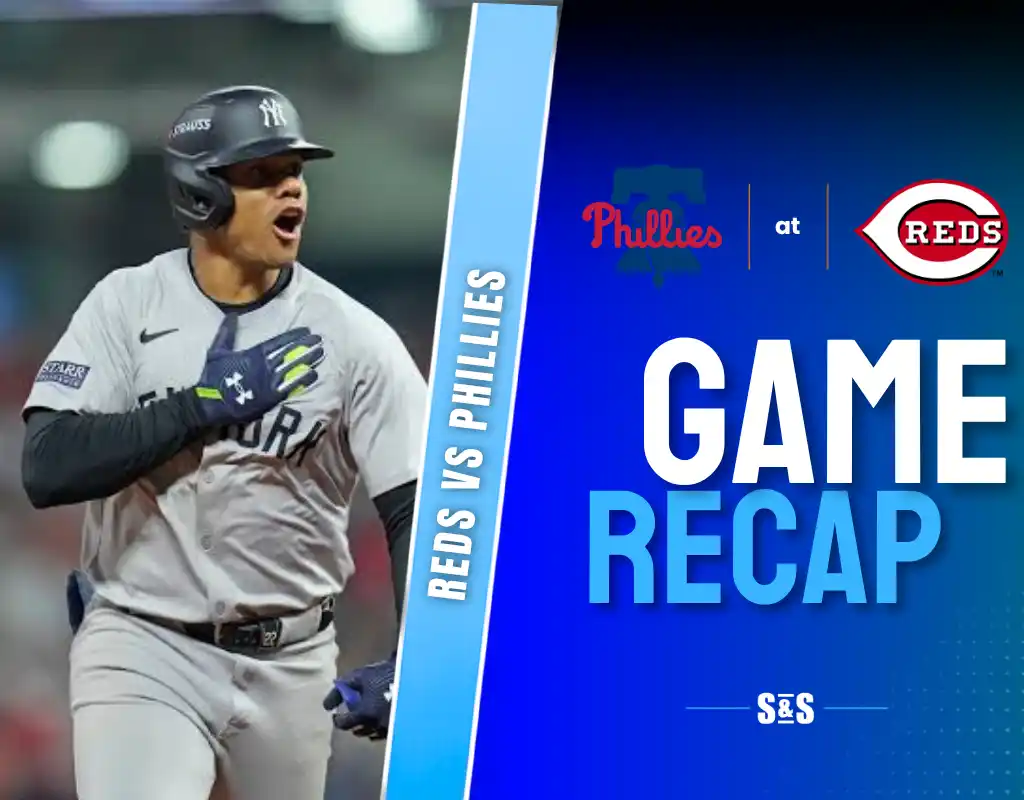

Table of Contents
The Phillies vs Reds recap gave Philadelphia bettors the right winner, but it also validated the original betting caution. The Phillies beat Cincinnati 1-0 at Great American Ball Park, cashing the Philadelphia moneyline but doing it in the thinnest possible full-game script for anyone laying a road favorite price near -152.
The original ScoresAndStats preview made the right distinction before first pitch: Philadelphia was the more likely winner behind Jesús Luzardo, but that did not automatically make the Phillies a strong bet at the full-game number. Bettors comparing the MLB preview board had to decide whether Luzardo’s edge was enough to overcome road favorite pricing, Cincinnati’s home park, and late-inning volatility.
The answer was yes on winner, no on comfort. Phillies moneyline bettors were rewarded, Reds underdog backers were punished by one eighth-inning RBI single, and under-style bettors had the cleanest game script. The main betting lesson was direct: the better starter can cash the side, but when the market already charges full price for that edge, a 1-0 road win proves why price discipline matters.











Go Inside the Handicappers’ Playbook
All in one spot. Real-time line moves, sharp reads, and verified edges.
Philadelphia Phillies vs Cincinnati Reds Game Recap
| Game Detail | Result |
|---|---|
| Final Score | Philadelphia Phillies 1, Cincinnati Reds 0 |
| Matchup | Philadelphia Phillies at Cincinnati Reds |
| Ballpark | Great American Ball Park |
| Starting Pitchers | Jesús Luzardo vs Brady Singer |
| Key Betting Result | Phillies moneyline cashed, but the pass recommendation aged well |
| Best Market Result | Philadelphia side and low-scoring game-script bettors |
This game was supposed to test whether Luzardo’s starting-pitcher edge could survive the full-game market price. It did, barely. The preview was not wrong to identify Philadelphia as the better side. Luzardo had the cleaner strikeout profile, the better run-prevention indicators, and the more reliable first-five path. The problem was that the sportsbook price already knew all of that.
Luzardo delivered exactly what the Phillies needed. He threw seven scoreless innings, allowed only two hits and two walks, and struck out 11. That was not just a good start. That was the entire handicap holding itself together. Philadelphia did not create early separation, did not punish Singer’s traffic risk the way the preview suggested it could, and did not turn the 9.5 total into the warm-weather Cincinnati scoring environment the market had priced. The Phillies won because Luzardo was elite.
Singer deserves almost as much credit from a betting standpoint. He matched Luzardo deep into the night and kept Cincinnati in the underdog window for seven innings. That mattered because the Reds’ best case before first pitch was not a blowout. It was Singer keeping the game close, Cincinnati’s home park preserving late scoring upside, and Philadelphia’s bullpen volatility becoming relevant. For most of the night, that was exactly the shape Reds backers wanted.
The decisive moment came in the eighth. Gabriel Rincones Jr. was hit by a pitch, Derek Hill entered as a pinch runner, and Justin Crawford delivered the RBI single that finally broke the scoreless tie. That one run decided every side ticket. It cashed the Phillies moneyline, beat Reds moneyline backers, and left Phillies run-line bettors with nothing to show for the correct winner. Anyone using market discipline should pause there. The side won, but the margin never came close to supporting an aggressive favorite approach.
The bottom of the ninth gave the full-game favorite bet one final stress test. Jhoan Duran allowed a single and a hit batter, putting Cincinnati in position to make the Phillies pay for not adding insurance. He recovered with two strikeouts and then got the final groundout. That sequence was exactly why the original preview preferred a first-five angle at the right price over a full-game Phillies moneyline at -152. Late bullpen risk did not burn Philadelphia, but it absolutely entered the room.
For a Phillies vs Reds recap, this was not a story about offensive power or lineup depth. It was a pitching duel that forced bettors to separate result from value. Philadelphia won the game. The preview’s pass still made sense. That is not a contradiction. That is baseball betting.
Key Stats That Explain the Betting Result
The key betting stat was Luzardo’s seven scoreless innings. He was the reason Philadelphia was favored, and he was the reason the Phillies survived a game in which their lineup produced only one run. When a road favorite cashes 1-0, the starter did not just contribute to the handicap. He carried it.
Luzardo’s 11 strikeouts also mattered because they removed Cincinnati’s best home-underdog path. The Reds needed contact, traffic, and pressure. Strikeouts kill all three. Great American Ball Park can reward hard contact quickly, but the ballpark does not help much when hitters are walking back to the dugout. That is why the Luzardo edge was stronger in the first-five innings than the full-game moneyline. His dominance was repeatable. The late lead was fragile.
Singer’s outing was the second most important betting factor. The preview highlighted his elevated WHIP and weaker season-long indicators as reasons Philadelphia deserved to be favored. He did not pitch like the risk profile on Thursday. He kept the Phillies quiet, worked into the eighth, and gave Cincinnati a real chance to cash as a home underdog. Bettors reviewing postgame betting lessons should treat this as a reminder that season-long pitching risk does not always show up on schedule.
The one-run final margin was the other essential number. Philadelphia was priced as a road favorite around -152, but the game played like a coin flip once Singer matched Luzardo. A one-run margin makes run-line positions dangerous, exposes the cost of laying a heavy moneyline, and rewards anyone who refused to chase the obvious side at the wrong price.
Betting Market Results
| Market | Result and Betting Takeaway |
|---|---|
| Phillies Moneyline -152 | Won; Philadelphia was the right winner but an expensive sweat |
| Reds Moneyline +140 | Lost; Cincinnati had the right underdog script but no run support |
| Phillies Run Line | Not supported by the one-run final margin |
| Reds Plus-Run Positions | Supported by the final margin despite the outright loss |
| Total 9.5 | Under won; the 1-0 final never approached the listed total |
The market result was clean only if the bettor played the Phillies moneyline and ignored the price. Philadelphia won, so the ticket cashed. But the process was not as clean as the final side result suggests. A road favorite at -152 needs more than “we got there.” It needs enough cushion to justify the risk. This game gave bettors almost none.
For anyone using sportsbook comparison, shaving a few cents would have helped, but not solved the larger problem. The preview made the key point before the game: Philadelphia could be the most likely winner and still be a thin bet if the true win probability sat closer to the high-50s than the low-60s. A 1-0 finish supports that warning. The Phillies won, but the margin for error was tiny.
The under was the strongest total-market result. The preview did not force an under because the 9.5 number already reflected park, weather, and bullpen risk. But once Luzardo and Singer settled into the duel, the game never looked like a true over threat. The total market expected volatility. The starters removed it. That is the kind of contrast bettors should document when reviewing sportsbook operations context and comparing how totals account for environment versus actual pitching form.
The run-line lesson was just as direct. Phillies -1.5 needed a strong plus-money return to be worth considering, and the final score showed why. Philadelphia never created enough offense to justify laying margin. Cincinnati +1.5 style positions had the better relationship to the actual game script, even though Reds moneyline bettors lost.
Game Analysis
This game was a pricing lesson dressed as a pitchers’ duel. Luzardo was the best player in the matchup, and Philadelphia had the better top-end case before first pitch. That made the Phillies the rightful favorite. The problem was never the favorite label. The problem was the cost of buying it.
The preview identified the first-five market as the cleaner way to express the Luzardo edge, and the game proved that logic. Through five innings, Luzardo had done his job. The Reds had not scored. Philadelphia’s starter advantage was real and visible. But the full-game moneyline required more than Luzardo’s early dominance. It required the Phillies to score, protect the lead, and navigate late relief. Those extra requirements made the full-game price more fragile.
Singer changed the betting picture by outperforming the risk profile. He did not let Philadelphia’s left-handed power dictate the night, and he did not allow the Phillies to stack traffic into a crooked number. The Phillies eventually scratched across the run, but they never turned the game into the projected 5-4 type of script. That matters because bettors often assume a starter with weaker season-long metrics will regress immediately. He might. He also might give his team seven innings in a 1-0 game. The number has to account for both outcomes.
Cincinnati’s failure was offensive, not structural. The Reds got the low-scoring home-underdog setup they wanted. They held Philadelphia to one run. They brought the tying run into the ninth. What they did not do was solve Luzardo or convert late pressure into a run. That is why Reds moneyline backers can feel unlucky without being able to call the bet a winner in process terms. A home underdog still has to score.
Philadelphia’s win was professional but thin. Crawford’s RBI single was enough because Luzardo and Duran made it enough. That is a profitable result, but it should not make bettors more willing to lay inflated road prices next time. If anything, it should make them more selective. This is exactly where handicapper evaluation should separate “predicted the winner” from “found the best bet.”
Why the Phillies Cashed but the Pass Still Made Sense
The Phillies cashed because their starting-pitching edge was legitimate. Luzardo’s strikeout profile was the cleanest handicap in the preview, and he delivered seven scoreless innings with 11 strikeouts. If the bet had been simply “which starter is more likely to control the game,” Philadelphia had the right answer.
The pass still made sense because the market did not offer a discount. At -152, the Phillies were being priced as a road favorite that needed to clear a high break-even point in a game with late bullpen risk and a hitter-friendly venue. The final score did not disprove that concern. It confirmed it. A single eighth-inning run decided the ticket.
This is the part bettors have to get comfortable with. A pass can be correct even when the predicted winner wins. Betting is not a standings contest. It is a price contest. The betting process should reward avoiding bad numbers, not just picking teams that eventually win by one run.
The strongest version of the Philadelphia bet was tied to Luzardo early. That meant first-five moneyline or first-five -0.5 only if the number was right. The full-game moneyline had more moving parts, and those moving parts almost mattered in the ninth. Duran escaped. The ticket cashed. The warning remains.
Why the Under Was the Cleanest Game Script
The total opened the night with a lot of built-in expectation. Great American Ball Park, warm July conditions, bullpen volatility, and two lineups with enough damage potential pushed the listed total to 9.5. The game did not come close. That was not because the market ignored pitching. It was because both starters beat the run environment.
Luzardo’s strikeouts kept Cincinnati from building innings, while Singer prevented Philadelphia from turning traffic into sustained pressure. The first five innings produced almost nothing offensively, and the seventh still had the feel of a game where one swing might be enough. When a total of 9.5 requires both teams to contribute, one lineup getting blanked and the other scoring once will bury the over quickly.
The sharper under lesson is not “always fade Great American Ball Park totals.” That would be a lazy read. The sharper lesson is that a high total needs actual offensive conversion, not just a friendly venue. Bettors following recap archive patterns should remember this game when the market prices environment heavily but the starting-pitching matchup can still suppress contact and traffic.
There is also a live-betting lesson. Once Luzardo and Singer showed command early, the pregame offensive environment became less important than the immediate game state. Bettors who waited could see the duel forming. Those who forced the over before first pitch were paying for a run environment that never arrived.
What the Stats Say for Future Matchups
The repeatable signal from this Phillies vs Reds recap is Luzardo’s ability to create a real early-inning betting edge. His seven scoreless innings and 11 strikeouts reinforce why Philadelphia can be dangerous in first-five markets when the price is fair. Bettors should continue to respect his strikeout profile, especially against lineups that need contact and pressure to build offense.
The fragile signal is Philadelphia’s full-game comfort as a road favorite. The Phillies won, but they scored one run and needed a tense ninth from Duran to finish it. That is not a profile bettors should blindly pay for at inflated prices. Philadelphia can be the better team and still be expensive if the market charges too much for the starter edge. Future bettors should compare price, bullpen availability, and confirmed lineups through the daily MLB matchup board before laying road chalk.
For Cincinnati, the repeatable signal is that Singer can keep the Reds live if he limits traffic and keeps the ball in the park. His season-long indicators still carry risk, but this start showed why underdogs are not priced on spreadsheets alone. When Singer is efficient and Cincinnati is catching a generous number, Reds plus-run positions may deserve attention.
The fragile Cincinnati signal is the offense. The Reds got the pitching performance they needed and still lost 1-0. That is the danger with home underdogs built around “keep it close” logic. Close is not enough if the lineup cannot score. Cincinnati’s future moneyline appeal depends on whether the matchup gives the Reds enough contact and extra-base potential, not just whether the price looks tempting.
The most relevant future betting angle is market selection. Philadelphia moneyline won, but the first-five angle matched the actual handicap better. Cincinnati moneyline lost, but Cincinnati plus-run style positions fit the final margin. The under was the cleanest read once the starters controlled the game. Anyone using one outside comparison through MLB betting picks should still bring the final decision back to number, market, and game script.
Philadelphia 1, Cincinnati 0 rewarded Phillies backers and crushed the listed total, but the result was not a green light to chase expensive road favorites. It was the opposite. Luzardo was brilliant, Crawford supplied the only run, and Duran finished it. The Phillies were the right winner. Passing at the full-game price was still the sharper pregame decision.