

 NFL Previews
  MLB Previews
  NBA Previews
  NHL Previews
  Soccer Previews
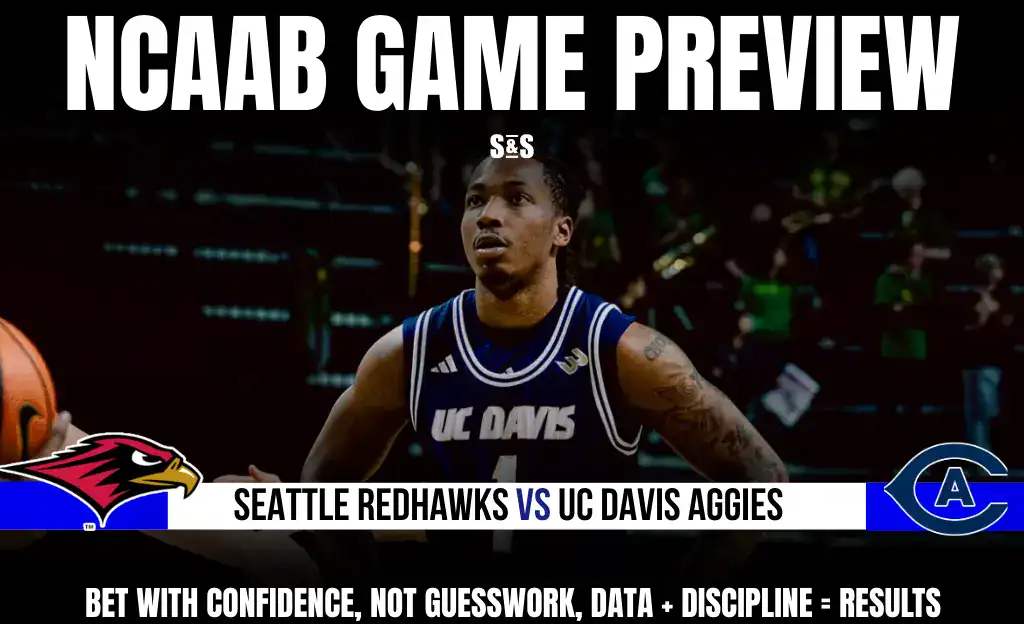

Game Preview Seattle Redhawks @ UC Davis Aggies
The December 17 mid-December college basketball matchup between the Seattle Redhawks and the UC Davis Aggies presents a stylistic contrast that bettors should weigh carefully. Seattle’s offensive profile emphasizes transition play and perimeter effectiveness, while UC Davis tends to lean on disciplined half-court sets and efficient shot selection. This intersection of tempo and structure often leads to outcomes where pace, shot quality, and defensive execution play larger roles than raw scoring averages.
From a handicapping perspective, this contest is a good example of how mid-major and Group of Five programs engage non-conference opportunities, often using games like this to test systems and build confidence. Bettors evaluating this matchup should reference broader slate context via the NCAAB picks page to compare similar spread and total dynamics, and track line movement on the NCAAB odds and scores hub for the most up-to-date pricing.
Both schools appear on the NCAAB teams directory, which offers pace, efficiency, and scoring splits useful for identifying matchup edges that do not always show up in surface statistics.

Streamline Your Picks in One Dashboard
All Sports. All Experts. One Login.
Odds and Key Information
Opening markets have established UC Davis as a modest home favorite, with spreads typically in the range of UC Davis -4 to -6 depending on the sportsbook. The total is generally posted around the 145 area, suggesting expectations for a moderately paced game with balanced possessions rather than a high-scoring tempo duel.
This pricing reflects a market belief that UC Davis’s half-court discipline and ability to control possessions should offset Seattle’s transition scoring, while still respecting the Redhawks’ perimeter tendencies. Bettors should monitor whether this total shifts as tip-off approaches, as moves can reveal confidence or skepticism about projected tempo and offensive execution.
| Item | Detail |
|---|---|
| Matchup | Seattle Redhawks @ UC Davis Aggies |
| Date | December 17 |
| Venue | Davis, California |
| Spread | UC Davis -4 to -6 |
| Total | Around 145 |
| Market tools | NCAAB odds and scores, NCAAB picks |
Tracking these numbers alongside similar non-conference games on the NCAAB picks slate helps clarify where value exists relative to expectation.
Seattle Outlook
The Seattle Redhawks bring a transition-oriented offensive profile that is built around quick possessions and perimeter efficiency. Their scoring distribution often features high usage from beyond the arc and a willingness to push pace early, which can generate early separation if shots fall.
Against teams that can mitigate transition scoring through controlled tempo and defensive rebounding, Seattle can experience scoring variance. In particular, disciplined half-court defenses force the Redhawks to execute through secondary sets, reducing the value of quick possessions and sometimes leading to contested perimeter attempts that suppress efficiency.
Defensively, Seattle is most effective when it limits second-chance points and maintains tight rotations on picks and cut plays. When rebounding opportunities are lost, the Redhawks can find themselves defending extended possessions that inflate opponent scoring and compress margins.
From a betting perspective, Seattle’s best value often emerges when they can dictate pace early and force teams into transition scenarios that limit defensive setup. Connecting these tendencies to similar pace profiles in the NCAAB teams index gives a clearer picture of where Seattle’s offense fits relative to peers.
UC Davis Outlook
The UC Davis Aggies rely on a more controlled offensive system that prioritizes half-court execution and minimizing turnovers. Their possessions tend to be longer, emphasizing set plays and disciplined shot selection. This approach can limit volatility and keep games within a predictable scoring band, especially when the opponent struggles to turn defense into transition offense.
Defensively, UC Davis emphasizes positioning and closing out on perimeter shooters, forcing opponents to convert through interior scoring opportunities. Against a team like Seattle, which attempts many three-point shots, this strategy can suppress efficiency if early perimeter attempts are contested and kept in single digits.
The Aggies’ defensive rebounding and ability to control possessions at home further bolster their ability to impose half-court rhythm. That makes UC Davis a frequent candidate to cover moderate spreads when they are favored, particularly against teams that are less efficient in half-court sets.
From a betting perspective, when UC Davis limits opponent transition scoring and wins the possession battle, their margin often offsets the spread even if raw scoring is modest. Bettors should reference their profile relative to similar disciplined teams on the NCAAB teams site for additional context.
Key Matchup
The defining strategic battle in this game is Seattle’s transition pace versus UC Davis’s half-court control. If Seattle successfully pushes early possessions into transition and hits perimeter shots, they can force UC Davis out of its preferred rhythm and accelerate pace beyond the market’s expectation. That scenario increases total volatility and can diminish the Aggies’ possession advantage.
Conversely, if UC Davis successfully slows possessions—forcing Seattle into secondary sets and contested perimeter attempts—the advantage leans heavily toward the home team. With longer possessions and controlled tempo, UC Davis wins the possession battle, compresses scoring opportunities, and often moves the total toward under.
Turnover margin is another critical lever. Seattle’s success often depends on quick outlets and avoiding prolonged half-court sequences. If turnovers rise, UC Davis’s defensive rebounding can reset possessions quickly, limiting Seattle’s transition scoring and supporting the under on the total.
This possession interplay aligns with broader analytical principles discussed in the NBA expert betting guide, where possession quality and tempo control are primary determinants in spread and total behavior.
Betting Trends
Seattle’s games often trend toward higher variance totals due to their reliance on three-point attempts and transition scoring. When Seattle’s perimeter shots fall early, totals can exceed expectations, but if those attempts are contested or inefficient, totals often compress.
Against the spread, Seattle tends to cover more frequently when the pace profile is elevated and opponent defenses allow transition opportunities. Conversely, disciplined defensive teams that limit early possessions suppress Seattle’s scoring and often hold the Redhawks below their projected numbers.
UC Davis trends lean toward controlled, possession-limited games where totals remain near or under market expectation. The Aggies cover moderate spreads at home when they can enforce half-court possession and limit turnovers. When UC Davis’s defensive rebounding is strong and opponents attempt more secondary possessions, their ability to suppress opponent scoring increases.
Comparing these trends on the NCAAB picks page and monitoring line movement via the NCAAB odds and scores hub offers deeper insight into how the market is valuing pace and possession control in mid-December matchups.
Context from futures content like the College Basketball Championship odds and player narratives in the John Wooden Award odds and predictions analysis helps frame how markets value efficiency and usage across the broader season, even if not directly predictive of this contest.
Prediction
This game projects as a possession-controlled matchup where UC Davis’s half-court execution and defensive discipline give the Aggies a slight edge. Seattle’s transition scoring and perimeter volume keep the total viable, but if UC Davis dictates pace and limits those opportunities, the game should lean toward the under.
Projected score: UC Davis 73, Seattle 67
Spread pick: UC Davis -5
Total lean: Under 145
Bet With Confidence, Not Guesswork
Data + Discipline = Results
Why You Need Expert Picks
Mid-December non-conference games are often difficult to handicap using surface metrics alone. Factors such as pace, possession quality, turnover margin, and opponent defensive identity frequently outweigh abbreviated scoring splits or public narratives.
The NCAAB picks page consolidates daily betting insights that integrate these deeper factors, offering perspectives that raw numbers may not capture. Following contributors on the Handicappers Leaderboard provides bettors with a way to evaluate who consistently identifies edges, avoids common misreads, and aligns picks with closing lines over time.
Combining this expert insight with real-time information from the NCAAB odds and scores board and team profiling from the NCAAB teams directory creates a process that is more disciplined and data-driven, making it easier to navigate volatility and identify value throughout the NCAAB season.

