

 NFL Previews
  MLB Previews
  NBA Previews
  NHL Previews
  Soccer Previews
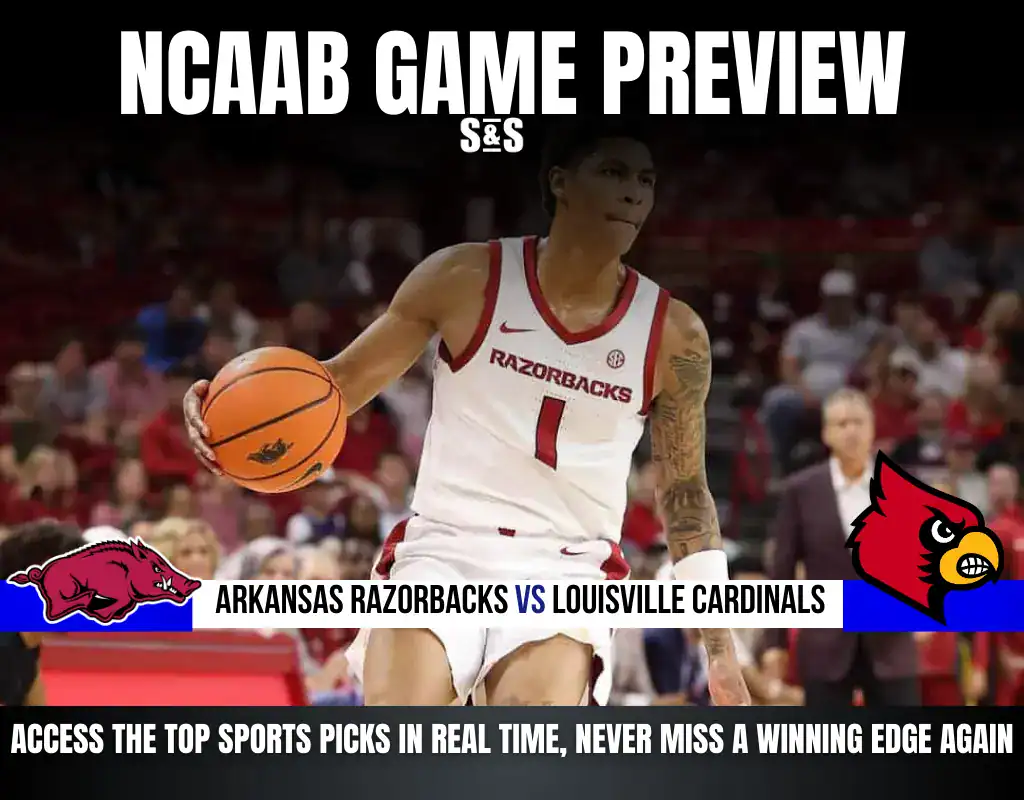

Game Preview Arkansas Razorbacks @ Louisville Cardinals
The early-season collision between the Arkansas Razorbacks and Louisville Cardinals offers one of the most meaningful nonconference evaluations for both programs. Arkansas continues shaping a fast-paced, guard-driven identity, while Louisville arrives with the structure and consistency that have fueled an undefeated start and increasing national attention.
The Arkansas Razorbacks enter the matchup depending heavily on tempo and perimeter production, traits that make them a high-variance team when viewed through predictive modeling. Their best performances involve transition scoring and rhythm-based perimeter attacks, and these elements play a significant role in how bettors track their profile on the NCAAB odds and scores page.
On the opposite end, the Louisville Cardinals present a more structured and consistent model. Their efficiency on both ends has pushed them into early discussions in broader markets such as the College Basketball Championship odds. Louisville’s defensive discipline and half-court balance challenge opponents to execute with precision.
This matchup brings two contrasting basketball philosophies into direct conflict: Arkansas’ speed and spacing versus Louisville’s control and discipline. The team that imposes its pace will likely dictate the path of the game.

Discover Where the Sharps Are Betting
Real Trends, Real Edges, Real Wins
Odds and Key Information
Early market projections lean slightly toward Louisville, reflecting their undefeated résumé and defensive reliability. Bettors are already reviewing the matchup through the lens of NCAAB picks, where projections focus on efficiency margins, shot-quality metrics, and pace variance.
Arkansas’ shooting volatility often influences totals movement, especially given Louisville’s ability to slow games into half-court possessions. If Arkansas cannot generate early-clock scoring, the Razorbacks risk being forced into contested shots, a pattern bettors have seen repeatedly when evaluating film and analytical breakdowns available across the NCAAB teams database.
Market totals may fluctuate throughout the day leading up to tipoff, particularly as bettors assess whether Arkansas can dictate tempo or whether Louisville’s structure will reduce overall possession count.
Arkansas Razorbacks Outlook
The Arkansas Razorbacks bring a high-tempo offensive identity built around guards who thrive in transition and off-ball motion. When Arkansas pushes pace, their spacing opens lanes for slashing guards and frees shooting opportunities generated through drive-and-kick action. Their best scoring outputs reflect these conditions, and bettors often correlate Razorback value with pace metrics surfaced through the NCAAB odds and scores.
However, Arkansas’ reliance on perimeter efficiency also introduces inconsistency. Against teams with organized defensive rotations, their rhythm often stalls, leading to extended stretches of late-clock attempts or contested jumpers. This is a significant concern when analyzing Louisville’s defense, which routinely disrupts timing and challenges ball movement.
Defensively, Arkansas struggles with interior positioning and help-side reliability. Opponents who control spacing and ball reversals frequently exploit mismatches or late reactions. This places added pressure on Arkansas’ guards to generate enough offense to compensate for stretches of defensive instability.
If Arkansas is to win, they must push tempo early, maintain shooting rhythm, and manufacture second-chance opportunities to prevent Louisville from dictating pace.
Louisville Cardinals Outlook
The Louisville Cardinals come into the matchup with one of the stronger balance profiles among early-season ACC teams. Their offensive philosophy emphasizes interior touches, deliberate spacing, and efficient perimeter selection. Louisville’s structure minimizes turnover risk, and their half-court execution showcases the traits commonly associated with deeper postseason contenders, something consistently discussed in articles like the NBA expert betting guide and extended futures coverage.
Defensively, Louisville excels at containing dribble penetration and rotating effectively toward shooters. Their perimeter containment is among their biggest edges in this matchup, as Arkansas requires rhythm threes to maximize its scoring ceiling. Louisville’s ability to close space and contest perimeter movement directly challenges Arkansas’ strengths.
Another decisive element is rebounding control. Louisville’s defensive rebounding rate limits opponent transition scoring, which is the Razorbacks’ most important scoring environment. If Louisville forces Arkansas into half-court possessions, the Razorbacks’ efficiency likely drops.
Louisville’s profile across analytics platforms and award discussions, including mentions in the John Wooden Award odds and projections, further reflects their strong foundational makeup.
Key Matchup
The pivotal matchup is Arkansas’ perimeter-driven pace versus Louisville’s defensive structure. Arkansas must generate clean, early-clock threes to stretch the defense and force Louisville into uncomfortable rotations. Louisville’s defensive identity is built to challenge exactly these attempts, often pushing opponents into mid-range shots or difficult drives.
Rebounding remains an equally important battleground. Arkansas needs second-chance opportunities to maintain pressure and tempo. Louisville’s discipline on the glass works against this, and limiting Arkansas’ transition scoring drastically shifts the expected pace and total.
Personnel matchups may also favor Louisville, particularly in late-game scenarios where execution becomes more critical than pace.
Betting Trends
Louisville has been more reliable against the spread due to their consistent defensive identity and reduced reliance on streak shooting. Arkansas’ ATS outcomes tend to mirror their shooting patterns, making them far more volatile. Analyst models reviewed through NCAAB picks frequently reference this variance when evaluating Razorback games.
Totals bettors will have to weigh Arkansas’ pace potential against Louisville’s likelihood of imposing a slower style. Even if the game begins with rapid scoring surges, Louisville’s ability to settle into half-court possessions makes late-game unders more likely unless Arkansas sustains shooting efficiency.
Access Thousands of Data-Driven Plays
From the First Pitch to the Final Whistle
Prediction
Louisville’s stability, defensive reliability, and rebounding structure align well with the demands of this matchup. Arkansas has the offensive tools to make this competitive, but their dependence on perimeter rhythm introduces significant risk against a disciplined opponent.
Projected score: Louisville 82, Arkansas 71
Spread pick: Louisville
Total lean: Under unless Arkansas dictates tempo early
Why You Need Expert Picks
Matchups featuring pace-versus-structure dynamics often lead to deceptive early movement in the betting market. Expert handicappers who study efficiency metrics, matchup dependencies, and market shifts provide valuable context that casual bettors often overlook.
Using advanced evaluation tools available through the Handicappers Leaderboard and full NCAAB picks pages helps bettors compare analytical projections with situational insights. Expert reports also integrate broader market references, including futures coverage such as the College Basketball Championship odds and skill-based assessment frameworks found in the NBA expert betting guide.
These resources bring added clarity to volatile matchups like Arkansas vs Louisville and help identify actionable betting edges across totals, spreads, and derivative markets.

