NFL Previews
  MLB Previews
  NBA Previews
  NHL Previews
  Soccer Previews
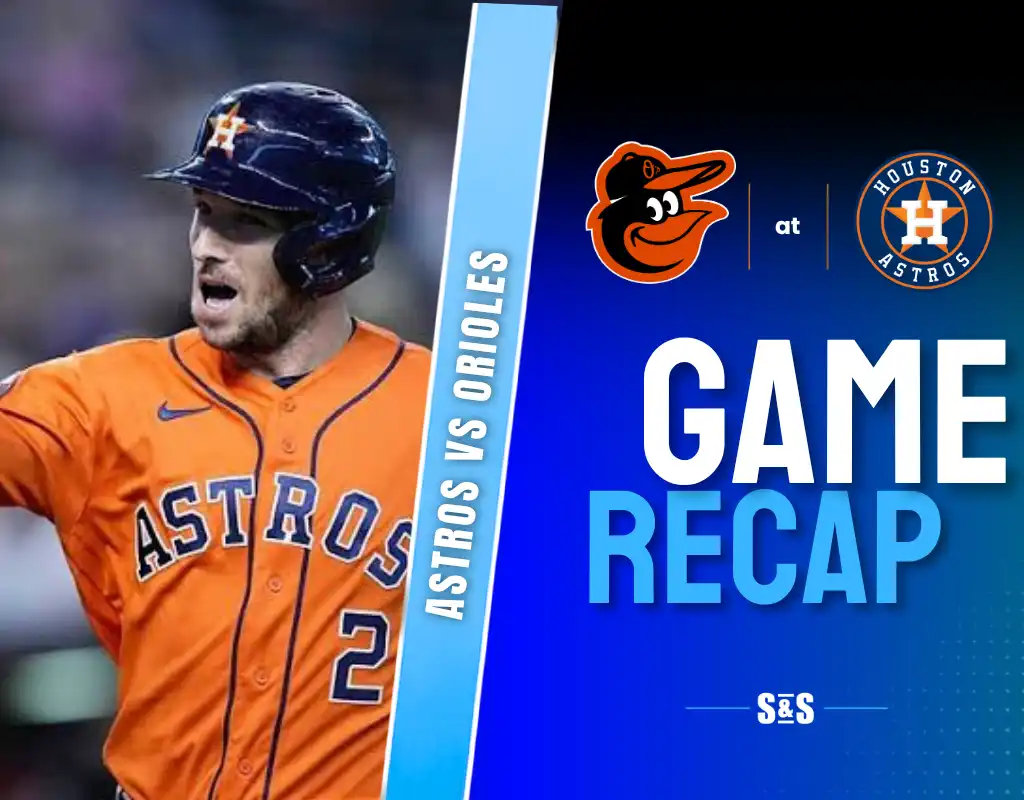

Table of Contents
The Orioles vs Astros recap starts with a result that looked controlled by the final score but carried a sharper betting lesson inside the first five innings. Baltimore beat Houston 5-2 at Daikin Park, completed the road sweep, and kept the Astros chasing almost all afternoon.
The ScoresAndStats preview pointed bettors toward first five innings under 4.5 at -110 or better, built around Brandon Young against Hunter Brown and the idea that the starter window could stay measured before bullpen decisions took over. That was the right market to isolate, but the result did not cooperate. Baltimore led 4-1 after five innings, which pushed the first-five total to five runs and punished the under by a half-run.
The biggest betting lesson from this Orioles vs Astros recap is that good market selection still needs clean execution. The preview correctly focused on the early innings instead of guessing at the full-game bullpen path, but Hunter Brown’s command issues and Baltimore’s fifth-inning damage changed the ticket. Bettors using a disciplined betting process should remember that the right market can still lose when one starter turns traffic into free bases.












Go Inside the Handicappers’ Playbook
All in one spot. Real-time line moves, sharp reads, and verified edges.
Orioles vs Astros Game Recap
| Game Detail | Result |
|---|---|
| Final Score | Baltimore Orioles 5, Houston Astros 2 |
| Winning Pitcher | Brandon Young |
| Losing Pitcher | Hunter Brown |
| Save | Grant Wolfram |
| Ballpark | Daikin Park |
| Key Betting Result | Orioles moneyline bettors were rewarded while the first five under 4.5 missed |
The first two innings supported the preview’s logic. Brandon Young and Hunter Brown each kept the scoreboard quiet, and the game had the feel of a matchup where the starting pitchers could control the first half. That is exactly what first-five under bettors wanted: strikes, limited traffic, and no early crooked number.
Baltimore changed the game in the third inning. Gunnar Henderson singled in the first run, and the Orioles added another run on a double steal sequence with Sam Huff at the plate. That made it 2-0 and immediately tested the under ticket. Two runs through the top of the third were survivable, but the margin for error had already narrowed.
Houston answered in the bottom of the third with Yordan Alvarez’s RBI double, cutting Baltimore’s lead to 2-1. That run mattered for the first-five market because it turned the game from a manageable two-run script into a three-run total before the fifth inning arrived. The under was still alive, but it needed two clean innings from both sides.
The fifth inning broke it. Leody Taveras delivered a two-run single off Brown, pushing Baltimore ahead 4-1 and moving the first-five total to exactly five runs. That one swing decided the preview’s recommended bet. It also exposed the thin line between a good under position and a losing ticket when a starter’s command creates baserunners before contact does the damage.
From there, Baltimore protected the game. Coby Mayo added a solo home run in the sixth, giving the Orioles a 5-1 lead and pushing Houston into a chase script. Jose Altuve homered in the eighth, but the Astros never built enough sustained pressure to make the late innings feel like a true comeback. Grant Wolfram finished the ninth for the save, and the Orioles walked out with a sweep that mattered for both the standings and the MLB preview board.
Key Stats That Explain the Betting Result
The most important betting stat was the first-five line score: Orioles 4, Astros 1. That single number explains why the preview’s best bet missed. First five under 4.5 did not lose because the game turned into a wild slugfest. It lost because Baltimore’s fifth-inning two-run single pushed the early total over the threshold by one run.
Young was the main reason Baltimore controlled the full game. He worked seven innings, allowed one earned run, and struck out seven. That outing gave the Orioles exactly what road underdogs need: length, strike throwing, and enough run prevention to keep the home team from leaning on late-inning pressure.
Brown’s line told the other side of the story. He allowed four earned runs in 4.2 innings, and his command problems were the difference between a close early-game under and a failed ticket. Walks and hit batters matter in baseball betting because they create scoring threats without forcing the offense to string together hard contact. Baltimore took advantage.
The team totals were modest by full-game standards. Baltimore had five runs on six hits, while Houston had two runs on seven hits. That is not an offensive explosion. It is a sequencing and command result. Baltimore produced the right hits with runners on base, while Houston’s traffic did not become enough run production.
The Astros’ inability to convert chances was central to the final score. Houston had hits, but the lineup did not turn them into sustained innings. That kept Baltimore’s moneyline position strong after the fifth and made the late Altuve homer feel more like scoreboard trimming than a genuine market flip. For bettors using matchup analysis, the lesson is not just how many hits a team collects. It is whether those hits arrive with enough pressure to change the ticket.
Betting Market Results
| Market | Betting Takeaway |
|---|---|
| First Five Innings Under 4.5 | Lost as Baltimore led 4-1 after five innings |
| Orioles Moneyline | Won as Baltimore controlled the game behind Young’s seven-inning start |
| Astros Moneyline | Lost as Houston produced only two runs despite seven hits |
| Orioles Run Line | Baltimore’s three-run margin rewarded Orioles margin-based positions |
| Full Game Total | The seven-run final leaned lower, but exact full-game total grading depends on the posted number |
The first-five under was the key betting result because it was the preview’s stated best bet. The market selection was understandable: focus on the starters, avoid late bullpen uncertainty, and take a clear threshold. The problem was that Brown did not give the game enough command stability to keep Baltimore under control through five innings.
Orioles moneyline bettors had the better side once Baltimore reached the middle innings with a lead. Young gave them length, the lineup made Brown pay for free traffic, and Houston never put together the rally that would force Baltimore into a late-game panic. That is a cleaner full-game result than the first-five total, even though the preview’s main betting angle missed.
Astros bettors had a frustrating ticket because the final was not the product of zero offense. Houston had seven hits. The issue was timing. Yordan Alvarez drove in a run in the third, Altuve homered in the eighth, and too much of the rest of the afternoon turned into missed opportunity. That is how a home moneyline can lose without the lineup looking completely helpless.
For bettors comparing future numbers through sportsbook comparison or outside MLB boards such as MLB betting analysis, this game is a useful reminder that a first-five under is not just a pitcher-quality bet. It is a command bet, a baserunner-management bet, and a sequencing bet. Brown had to keep Baltimore from stacking free chances. He did not.
Game Analysis
This Orioles vs Astros recap is a clean case of one starter executing the market plan and the other starter breaking it. Young gave Baltimore seven strong innings and held Houston to one run while he was in the game. Brown showed enough stuff to record strikeouts, but he did not control the strike zone well enough to protect the early total.
The third inning was the first warning. Henderson’s RBI single was straightforward run production, but the double steal sequence was the kind of baseball play that hurts under bettors because it manufactures a run without requiring a big swing. Baltimore forced Houston to defend, pressured the battery, and turned movement into scoreboard value.
Houston’s answer in the bottom half kept the game competitive. Alvarez’s RBI double made it 2-1 and showed why the Astros still had enough top-order quality to punish a mistake. But that was the last run Houston scored against Young. The Orioles starter adjusted, settled the game, and forced the Astros to keep waiting for a bigger inning that never came.
The fifth inning was the decisive betting turn. Taveras’ two-run single did not just extend Baltimore’s lead. It changed the first-five grade. Under bettors entered the inning needing no more than one run the rest of the way through five. Baltimore scored two, and the ticket was gone before the bullpens mattered.
That is why baseball totals are so unforgiving at the margins. A 4-1 first-five score is not a wild result. It is one run above the number. The handicap can look sensible for most of the window and still miss because one inning gets stretched by command trouble, baserunner pressure, or one well-placed hit.
The sixth inning made the full-game side much clearer. Mayo’s solo home run pushed the Orioles lead to 5-1 and gave Young room to attack the zone. When a road starter has a four-run cushion and is already handling the opposing lineup, the home team’s late-inning edge starts to shrink. Houston needed traffic, not just one swing.
Altuve gave Houston that one swing in the eighth, but the solo home run only cut the lead to 5-2. Baltimore did not let it snowball. That late control is why the Orioles moneyline finished cleanly even after the first-five under failed. The same game produced two different betting stories, which is exactly why the market matters more than the team name.
Why the First Five Under Failed
The first five under failed because Brown did not keep Baltimore’s early traffic contained. That is the direct answer. The preview’s logic depended on both starters holding the game together, and only one of them did it cleanly enough. Young controlled Houston. Brown let Baltimore reach the fifth inning with enough scoring leverage to break the number.
That does not make the preview’s market selection reckless. First-five unders are often the cleaner approach when the starter window is easier to project than the bullpen portion. The miss here came from execution. Brown issued too many free passes, allowed Baltimore to extend innings, and eventually paid for it when Taveras drove in two runs.
The painful part for under bettors is that the full-game score still finished at only seven runs. That can make the first-five loss feel worse. But tickets are graded by the market played, not by the general tone of the game. The first five innings had five runs. The wager needed four or fewer. That is the whole grade.
This is why price thresholds matter. The preview named under 4.5 at -110 or better, which was a disciplined line. Bettors should not stretch that kind of play to worse pricing and then act surprised when a half-run result decides the outcome. The market discipline is not only about finding a good angle. It is about respecting how little margin baseball totals sometimes give you.
Why Baltimore Rewarded Road Bettors
Baltimore rewarded road bettors because the Orioles did the two things road underdogs need to do: score first and get length from the starter. Once Baltimore led 2-0 in the third, Houston had to play from behind. Once Young kept the Astros to one run through seven innings, Baltimore no longer needed a huge offensive day to finish the job.
The Orioles also used pressure well. Henderson’s RBI single, the double steal, Taveras’ fifth-inning hit, and Mayo’s homer each mattered in a different way. Baltimore did not need 12 hits. It needed timely offense, one power swing, and enough baserunner pressure to expose Brown’s command.
Young’s role cannot be overstated. Seven innings from a road starter changes the entire full-game betting picture. It limits bullpen exposure, keeps the manager from hunting matchups too early, and prevents the home team from seeing a parade of middle relievers. For bettors evaluating MLB matchup context, that is one of the strongest full-game signals a team can get.
The Orioles’ win also had series value. Completing a sweep in Houston is not just a standings note. It tells bettors Baltimore carried pressure, confidence, and late-game stability through the weekend. That does not guarantee the next result. It does, however, make Baltimore harder to dismiss when the starting-pitcher matchup gives the Orioles a realistic path.
Why Houston Failed to Convert Enough Traffic
Houston’s issue was not a total lack of contact. The Astros finished with seven hits, one more than Baltimore. The problem was that those hits did not arrive with enough sequencing to change the game. That is where baseball betting can frustrate casual box-score reading. More hits do not automatically mean the better ticket.
Alvarez’s RBI double in the third was the moment that should have moved Houston into the game. At 2-1, the Astros had a path. They had the home crowd, the middle innings still available, and a starter who could have kept the deficit manageable with one clean inning. Instead, the fifth inning moved the game away from them.
Brown’s command put Houston in too many defensive innings. Even when the Astros offense had chances, the pitching staff had already given Baltimore enough cushion to let Young pitch aggressively. That changed the at-bat pressure. Houston was not trying to tie a 1-1 game. It was trying to chase a multi-run deficit against a starter who was locating.
Altuve’s eighth-inning homer kept the final from looking completely flat, but it did not create the kind of pressure that flips a moneyline ticket. Solo home runs help. They do not fix an afternoon of missed scoring chances. Bettors reviewing handicapper accountability should look for that distinction when analyzing future Astros games.
What the Stats Say for Future Matchups
The repeatable signal from this Orioles vs Astros recap is Young’s ability to stabilize a road game. Seven innings, one earned run, and seven strikeouts gave Baltimore a full-game structure that travels. If Young continues to give the Orioles that kind of length, Baltimore becomes more playable in moneyline and first-five markets when the price is reasonable.
The fragile signal is Baltimore’s offensive efficiency. Five runs on six hits is useful, but it is not something bettors should blindly project forward. The Orioles made the most of their chances, pressured Brown, and got the key fifth-inning hit. That is good execution. It is not a guarantee that every similar scoring chance turns into a run next time.
For Houston, the repeatable concern is command sensitivity. When the Astros’ starter gives away baserunners, the offense has to be much more efficient to compensate. That was the problem here. Houston had enough hits to stay interesting, but not enough run-scoring sequencing to overcome Brown’s early damage.
The fragile part for the Astros is assuming one sweep defines the whole club. A 5-2 loss is not a reason to price Houston as helpless, especially with top-order power still present. The more useful adjustment is narrower: when Houston is facing a starter capable of working deep, bettors need to see a better case for sustained traffic before backing Astros moneyline or team-total positions.
The most relevant future betting angle is still market selection, but with a warning. The first-five under was a logical target because it isolated the starter matchup. It still lost because Brown’s command made the early innings too expensive. Before the next comparable matchup, bettors should compare starter form, walk risk, early scoring pressure, and bullpen workload through broader betting context, then use price comparison, market access, and handicapper accountability as filters rather than shortcuts.
Orioles 5, Astros 2 was a strong Baltimore road win, but the sharper lesson came from the failed first-five under. Young gave the game the controlled shape the preview wanted. Brown did not. That is baseball betting in one sentence: the market can be right, the number can be fair, and one command-driven fifth inning can still beat the ticket.