NFL Previews
  MLB Previews
  NBA Previews
  NHL Previews
  Soccer Previews
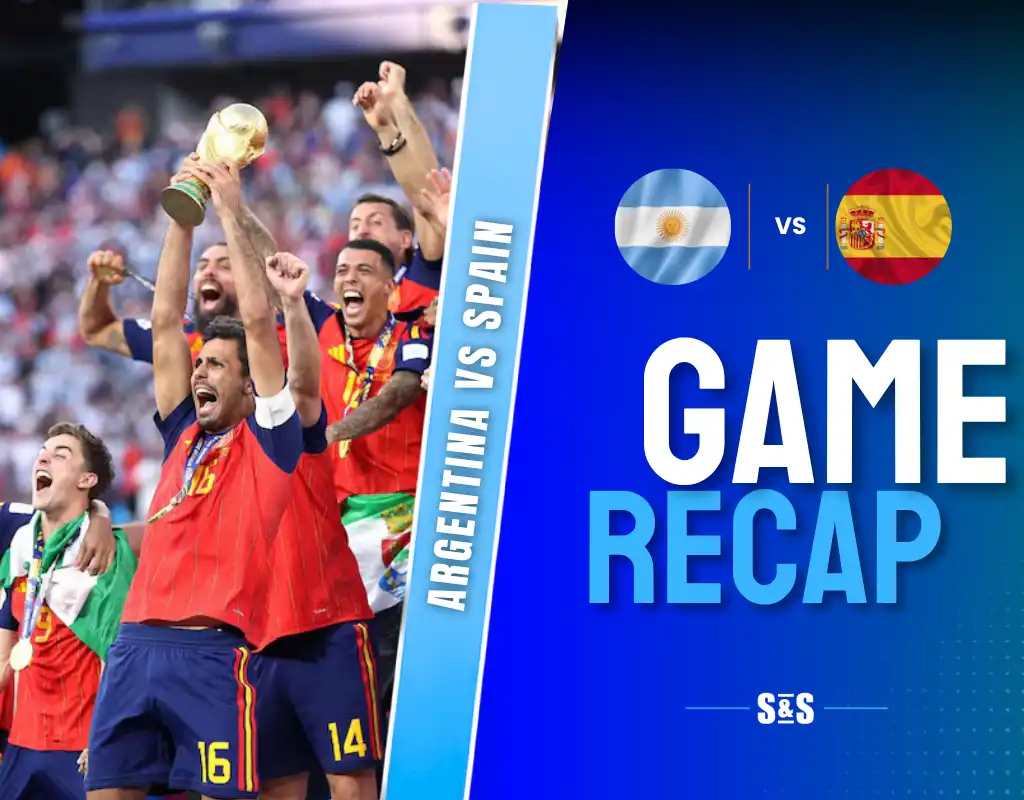

Table of Contents
The Spain vs Argentina recap starts with a final that made bettors wait for the one moment that mattered. Spain beat Argentina 1-0 after extra time in the 2026 FIFA World Cup Final, with Ferran Torres scoring in the 106th minute to give La Roja their second world championship.
The pregame betting expectation from the ScoresAndStats preview was clear: Spain had the cleaner control profile, Argentina had the late-match danger, and the strongest betting angle was a low-scoring match script. That proved to be the right read. Bettors who respected the under-style setup were rewarded, while anyone asking for an open final had to sit through a tight, controlled, chance-protection match.
The biggest betting lesson from this Spain vs Argentina recap is that finals do not need to look explosive to be dangerous. The better team can control the ball, suppress risk, and still need extra time to finish the job. That is why bettors using a disciplined betting process should separate three-way regulation markets, trophy-lift markets, handicap positions, and total-goals reads before treating one match opinion as one bet.

Go Inside the Handicappers’ Playbook
All in one spot. Real-time line moves, sharp reads, and verified edges.
Spain vs Argentina Match Recap
| Match Detail | Result |
|---|---|
| Final Score | Spain 1-0 Argentina after extra time |
| Goal | Ferran Torres, 106th minute |
| Venue | New York New Jersey Stadium |
| Competition | 2026 FIFA World Cup Final |
| Key Betting Result | Low-scoring positions were rewarded |
| Best Market Lesson | Spain control did not automatically mean a regulation moneyline win |
Spain entered the final with the stronger defensive profile, the cleaner possession structure, and an extra recovery edge from the semifinal schedule. The preview’s logic was not built around Spain overwhelming Argentina early. It was built around Spain controlling territory, limiting transition danger, and making Argentina defend long enough for the match to tilt toward patience rather than chaos.
That is exactly how the final developed. Argentina did not collapse, and that matters for the betting read. A weaker favorite narrative would say Spain should have been trusted simply because they were the better side. A sharper betting read says Spain were the better side, but the final context made regulation separation difficult. Argentina’s compact defending, knockout experience, and willingness to absorb pressure kept the match alive long enough to punish impatient moneyline bettors who did not respect the draw risk.
The decisive moment came in extra time. Ferran Torres scored in the 106th minute after Spain finally turned pressure into the kind of high-leverage finish that had been missing through regulation. For trophy-market bettors, that was enough. For bettors who backed Spain only in the standard three-way regulation market, the match script was more complicated because the winning goal arrived after the 90-minute window.
That distinction is the whole article. A final score can say Spain 1-0 Argentina, but a bettor has to ask when the goal arrived and which market was actually played. That is why the soccer preview board matters before kickoff. The side, total goals, handicap, draw-no-bet, and lift-the-trophy markets can all tell different stories after the same match.
Key Match Factors That Explain the Betting Result
The first factor was Spain’s defensive control. The preview emphasized that Spain had conceded only once entering the final and had been the most reliable chance-suppression team in the tournament. That profile mattered more than a generic “better team wins” angle. Spain were able to keep Argentina from turning the match into a repeated transition game, which protected the low-scoring script and reduced the danger of a wide-open final.
The second factor was Argentina’s ability to extend the match. Argentina did not need to dominate possession to create betting stress. They needed to stay level, defend the central spaces, and force Spain to keep solving the same compact block. That was enough to make regulation Spain moneyline positions uncomfortable and enough to remind bettors why finals often carry draw risk even when one side has the better statistical profile.
The third factor was the timing of the goal. Torres scoring in the 106th minute was perfect for Spain’s trophy path and perfect for the low-scoring thesis, but it was not the same as an early goal that would have opened the match. Because the goal came after regulation, Argentina never had to chase for long stretches in the first 90 minutes. That preserved the under-style rhythm and kept the match from becoming the stretched, end-to-end final that over bettors would have wanted.
The fourth factor was finishing pressure. Spain’s control did eventually matter, but bettors should not confuse eventual pressure with early separation. That difference is useful for future tournaments, especially when comparing matchup analysis with actual market type. A side can be correct to lift a trophy and still carry too much risk in a regulation-only price.
Betting Market Results
| Market | Betting Takeaway |
|---|---|
| Spain Trophy Result | Rewarded after Spain won the final in extra time |
| Argentina Trophy Result | Lost despite Argentina holding Spain scoreless through regulation |
| Three-Way Regulation Market | The extra-time goal made market rules critical for grading |
| Under 2.5 Goals | The preview’s low-scoring angle fit the match script |
| Spain Handicap | Larger Spain handicap positions carried major risk because separation came late |
The cleanest betting result was the total-goals read. The ScoresAndStats preview identified Under 2.5 Goals as the best bet, and the final delivered exactly the kind of controlled, low-scoring script that supported that position. Spain did not need a multi-goal performance to validate the handicap. They needed to suppress Argentina, keep the match stable, and find one decisive finish.
The side market was more nuanced. Spain backers who used a lift-the-trophy position got the result they wanted. Bettors who used regulation-only Spain exposure had to deal with the fact that the match was still level at the end of normal time. That is the kind of difference bettors should review before comparing future sportsbook comparison options, because soccer market labels are not decoration. They decide whether a correct read becomes a winning ticket.
For readers comparing broader soccer opinions with market discipline, the natural next step is checking whether the handicap matches the game script. A bettor can also compare external projections and future cards through soccer betting analysis, but the key here remains simple: do not turn a trophy opinion into a regulation wager without understanding the draw risk.
Game Analysis
This Spain vs Argentina recap is really about control versus conversion. Spain had the match shape that bettors expected. They were the team more likely to dictate tempo, the team more likely to keep the ball, and the team with the defensive structure to make Argentina work for limited transition chances. But soccer finals are not settled by control alone. They are settled by the moment when control becomes a goal.
For most of the match, Argentina survived that gap. That does not mean Argentina had the better betting side across every market. It means Argentina were dangerous enough defensively and experienced enough emotionally to make Spain’s price sensitive. The preview warned that Argentina’s late-game threat and knockout experience made the three-way moneyline less comfortable than a simple team-strength comparison suggested.
The under angle was stronger because it did not require Spain to score early. It only required the final to stay compact, tense, and risk-managed. Spain could dominate long spells without breaking the total. Argentina could defend deep without breaking the total. Extra time could arrive without breaking the total. That is why the total was the cleaner expression of the preview’s match read.
This is also where bettors should be careful with possession narratives. Spain’s possession helped reduce Argentina’s transition volume and eventually wore down the match. But possession did not automatically create a comfortable margin. Bettors using handicapper evaluation should look for analysis that explains what possession is doing. Is it creating shots? Is it denying counters? Is it protecting a draw? Is it forcing fatigue? In this final, possession was mostly about control and pressure accumulation, not early scoreboard separation.
Why Spain Rewarded Trophy-Market Bettors But Tested Regulation Backers
Spain were the right champion, but that does not mean every Spain ticket was the right ticket. That is the betting lesson. Tournament soccer gives bettors multiple ways to express the same opinion, and each one carries a different risk profile. Spain to lift the trophy allowed for extra time and penalties. Spain in a three-way regulation market asked La Roja to solve Argentina inside 90 minutes. Those are not the same wager.
The preview leaned toward Spain as the more trustworthy side while also noting that Argentina had enough knockout experience to drag the final beyond regulation. That was not a throwaway limitation. It was the central market warning. Spain’s eventual 1-0 win rewarded patience, but it also punished anyone who ignored the timing risk.
From a betting perspective, that makes the result more useful than a routine favorite win. A 3-0 Spain victory would have told bettors that the favorite price was justified across side and handicap markets. A 1-0 extra-time win says something sharper: Spain had the better profile, but the market needed to be chosen carefully. That is exactly the kind of lesson that belongs in a market discipline discussion.
Why the Low-Scoring Script Was the Best Read
The low-scoring script made sense before kickoff and looked even stronger after the match started. Spain’s defense had been elite throughout the tournament, and Argentina were facing the most organized opponent they had seen. That combination made a wide-open match less likely than the team names suggested.
Finals also create their own gravity. Neither side wanted to make the first major mistake. Spain could afford to circulate possession and wait for the match to open. Argentina could afford to defend compactly and trust their late-match quality to find one moment. That tactical patience reduced the chance of an early exchange of goals.
The under was not just a statistical angle. It was a game-state angle. A scoreless first half helped the under. A scoreless regulation helped the under. A late extra-time winner helped the under. Even Spain’s dominance helped the under because their defensive structure prevented the match from becoming a counterattack festival. Bettors looking ahead to future international finals should keep that in mind when scanning the soccer preview board. The best total is often the one that matches both team quality and match incentives.
What the Stats Say for Future Matchups
The repeatable signal from this Spain vs Argentina recap is Spain’s defensive control. That is the part bettors can carry forward. Spain showed they can manage elite opposition, protect central spaces, and keep a final from turning into a frantic match. That makes Spain trustworthy in future moneyline, draw-no-bet, and trophy-style markets when the price is not too expensive.
The fragile signal is the timing of the goal. A 106th-minute winner is decisive, but it is not a guarantee that Spain will always finish late pressure. Bettors should not treat extra-time finishing as automatic. The better takeaway is that Spain can create the conditions for pressure to matter. Whether that pressure turns into a goal still depends on finishing, substitutions, opponent fatigue, and match state.
For Argentina, the repeatable signal is resilience. They held Spain scoreless through regulation and forced the champion to keep solving the match. That matters for future handicap and draw-no-bet evaluations. The fragile part is offensive threat against elite defensive teams. Argentina’s name value and tournament pedigree will still attract money, but bettors need to ask whether the chance creation supports the price.
The most relevant future betting angle is market selection. When a favorite has the better structure but the opponent has enough defensive discipline to extend the match, trophy markets and draw-no-bet positions can be safer than regulation-only moneylines. Totals can also offer cleaner value when the match incentives point toward caution. Before betting the next major final, compare the side, total, handicap, and market rules through broader betting context, then use price comparison, market access, and handicapper accountability as filters rather than shortcuts.
Spain 1-0 Argentina was a deserved championship result, but the betting lesson was not simply “back Spain.” It was to back the right Spain market, respect Argentina’s ability to stretch the match, and understand why the under was the cleanest read from the preview. That is the kind of discipline bettors need when the team name, the trophy moment, and the actual ticket do not all mean the same thing.