NFL Previews
  MLB Previews
  NBA Previews
  NHL Previews
  Soccer Previews
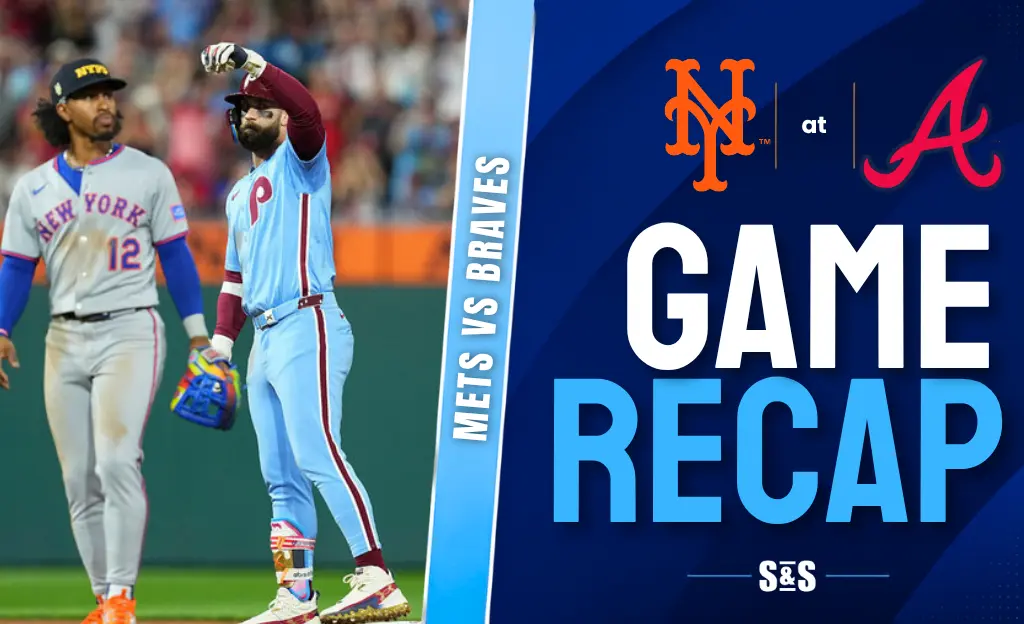

Table of Contents
This Mets vs Braves recap starts with the market correction: New York beat Atlanta 7-6 in 10 innings at Truist Park, cashing as the listed +112 underdog and punishing Braves moneyline bettors who laid the -132 favorite price. Atlanta had the better pregame position, the home field, the stronger starter trend with Reynaldo López, and a 3-2 lead entering the ninth. It still was not enough.
The Mets rewarded underdog backers because they survived a messy game, waited out the late-inning leverage, and got the two swings that mattered most. Juan Soto’s three-run homer in the ninth gave New York a 5-3 lead, Matt Olson’s second homer tied it in the bottom half, and Luis Torrens’ two-run double in the 10th finally pushed the Mets over the line.
The main betting lesson from this Mets vs Braves recap is that late bullpen decisions can erase eight innings of favorite-side comfort. Atlanta was priced like the more stable team, and for long stretches that looked fair. But a moneyline ticket is graded after the final out, not after the starter exits. Bettors using the broader MLB preview board should treat this game as a reminder that favorite prices need clean bullpen execution, not just a reasonable pregame handicap.

Find value before the match starts.
Check our picks.
New York Mets vs Atlanta Braves Game Recap
| Game Detail | Result |
|---|---|
| Final Score | New York Mets 7, Atlanta Braves 6 in 10 innings |
| Key Mets Swing | Juan Soto three-run homer in the ninth inning |
| Key Braves Swing | Matt Olson two-run homer in the ninth inning, his second homer of the game |
| Deciding Hit | Luis Torrens two-run double in the 10th inning |
| Venue | Truist Park |
| Key Betting Result | Mets moneyline cashed as the listed underdog; Braves moneyline failed as the favorite |
The preview gave Atlanta the more trusted setup. The Braves were listed at -132 on the moneyline, while the Mets were priced at +112. López entered with signs of improved form, and the article pointed to his recent five-inning, one-run outing against St. Louis as a reason Atlanta could feel better about the rotation. The Mets countered with Freddy Peralta, who had allowed 18 runs, 15 earned, over his previous three starts.
For much of the game, that pregame read had support. Atlanta answered Carson Benge’s solo home run in the second inning with two runs of its own, then Olson homered in the third to make it 3-1. The Braves had the lead, López had kept the Mets from taking full control, and Atlanta’s defensive plays helped hold New York to one run in the sixth when the Mets were threatening for more.
That is where the favorite ticket looked alive. The Braves had a 3-2 lead after eight innings, and the Mets had made enough mistakes on defense and the bases to feel like a team still fighting itself. But the market does not pay for “looked right.” It pays for “finished right.” In the ninth, Atlanta put the game in the hands of Raisel Iglesias, and Soto changed everything with one swing.
Soto’s three-run homer gave the Mets their first lead since the second inning and turned a Braves moneyline position into a panic ticket. Atlanta still had a response. Olson doubled down on his own monster night by hitting a two-run homer off Devin Williams in the bottom of the ninth, tying the game 5-5 and sending it to extra innings. That swing kept Braves bettors alive, but it did not rescue them.
The 10th inning delivered the final betting break. Owen Murphy made his major league debut for Atlanta in a brutal leverage spot and eventually faced Torrens with two outs. Torrens lined a two-run double to left, scoring Bo Bichette and Jared Young. Atlanta answered with one run on a Michael Harris double in the bottom half, loaded the bases, and still could not finish the comeback.
For bettors reviewing this through a disciplined betting process, the takeaway is not that the Braves were a bad pregame handicap from the first pitch. The takeaway is that laying a favorite number in a divisional game requires late-inning certainty the Braves did not provide. New York took advantage of that one opening and turned a plus-money ticket into the better side.
Key Stats That Explain the Betting Result
| Verified Stat | Betting Impact |
|---|---|
| Mets 7, Braves 6 in 10 innings | New York cashed as the listed +112 underdog |
| Juan Soto: three-run homer in the ninth | Flipped the game from Braves control to Mets moneyline position |
| Matt Olson: two home runs | Kept Atlanta alive, but did not protect the favorite ticket |
| Luis Torrens: two-run double in the 10th | Created the final separation for New York |
| Freddy Peralta: 4 2/3 innings, 3 runs, 2 earned | Did not dominate, but kept New York close enough for the late comeback |
The most important betting stat was not the total number of runs. It was New York’s late scoring leverage. The Mets scored three in the ninth and two in the 10th, which means five of their seven runs came after Atlanta had moved into what should have been its preferred bullpen script. That is the exact kind of game that punishes favorite bettors who trust the setup but underestimate the final six outs.
Soto’s homer was the swing that changed the ticket. The Mets had two runners aboard and two outs when he faced Iglesias. Atlanta could have gone another direction. The Braves chose to challenge Soto, and the matchup punished them. From a betting perspective, that is the danger of a short-to-mid favorite price: one bad matchup decision can erase all the earlier work.
Olson’s two-homer night is why the Braves loss does not read like a flat offensive failure. Atlanta had its star power. Olson homered in the third, then hit the game-tying two-run shot in the ninth after Ozzie Albies doubled. If bettors were looking only at the middle of the order, the Braves did enough to justify part of the pregame case. The problem was that one hitter cannot protect a moneyline when the bullpen gives away the lead and the offense strands the winning chances.
Torrens’ double is the stat that finishes the handicap. Extra innings can turn into automatic-runner noise quickly, but New York still needed the ball in play that scored both runs. Torrens gave the Mets the exact swing they needed after Soto had already supplied the dramatic first comeback. Anyone using handicapper evaluation after this result should separate the correct pregame logic from the late-game failure that actually decided the ticket.
Betting Market Results
The cleanest betting result was New York moneyline. The Mets were listed at +112 in the ScoresAndStats preview, and they cashed outright in 10 innings. That is the kind of plus-money result that matters because the Mets did not have to win this game often for the price to be useful. They only needed the late-game path to exist. It did.
Atlanta moneyline bettors lost despite being ahead entering the ninth and despite Olson’s game-tying homer in the bottom half. That makes the loss more painful, but it also makes the betting lesson sharper. A favorite ticket with a late lead should be in strong shape. The Braves could not finish because their relief plan lost the Soto matchup and their 10th-inning escape attempt failed with the bases loaded.
The run-line conversation belongs on the cautious side. Atlanta was favored, but the game was too volatile for a margin position. The Braves did not win outright, so any Atlanta run-line confidence was misplaced. New York’s underdog moneyline was the cleaner market because it captured the upset without asking the Mets to do anything beyond survive the final score.
The scoring shape was aggressive, with 13 combined runs and several late swings. Without a verified total from the preview page, the safest public betting read is that this game rewarded bettors who expected late offense and punished anyone who assumed the starter matchup would hold the scoring down for all nine innings. For future boards, bettors should use sportsbook comparison to protect themselves from stale totals and to understand how late bullpen risk is being priced.
This Mets vs Braves recap also shows why underdog pricing matters more than team form narratives. New York entered with plenty of flaws, but +112 gave bettors room to accept volatility. Atlanta at -132 required a cleaner finish. That is the difference between buying a risky dog and paying for a favorite that cannot afford one ninth-inning mistake.












Game Analysis
The game opened with both starters under immediate pressure. Peralta needed 22 pitches to escape the first inning after Michael Harris reached and moved up on a wild pitch. Benge then gave the Mets a 1-0 lead in the second with a solo homer, but Atlanta answered quickly. Dominic Smith and Mike Yastrzemski reached, Jim Jarvis dropped in an RBI single, and Harris added another run-scoring single to put the Braves ahead.
That early exchange mattered because it put Peralta into the same uncomfortable space the preview highlighted. He was not efficient, and Atlanta kept making him work. Olson’s third-inning homer stretched the Braves lead to 3-1, and Peralta eventually exited in the fifth after 103 pitches with men on second and third. Cionel Pérez escaped that jam, and that was one of the quiet turning points. If Atlanta gets another hit there, the moneyline script gets much cleaner.
The Mets cut it to 3-2 in the sixth when Francisco Alvarez singled home Benge, but New York also ran itself out of a bigger inning when Bichette was thrown out at home. That was the kind of sequence that usually makes underdog bettors question the ticket. The Mets were getting chances but not always handling them cleanly.
Atlanta’s defense helped protect the lead. Austin Riley and Ozzie Albies turned a key double play in the seventh after A.J. Ewing and Soto had walked. Matt Olson also made a strong play to help end the eighth. Those moments kept the Braves in front and made the favorite ticket look stable heading into the ninth.
Then the game turned into a bullpen test. Iglesias recorded two outs but gave up two singles before facing Soto. That was the inning’s pressure point. The Braves chose to pitch to Soto, and he hooked the three-run homer that made it 5-3 Mets. It was not a cheap run. It was a superstar swing in the one matchup Atlanta could not lose.
Atlanta’s answer was strong but incomplete. Olson’s two-run homer against Devin Williams tied it, but the Braves could not finish the ninth even after creating more traffic. In the 10th, Murphy was thrown into a tough debut spot, Torrens doubled, and New York had the 7-5 lead. Harris’ RBI double in the bottom half made it 7-6, but the Braves stranded the bases loaded when Mauricio Dubón grounded into the final out. For bettors reviewing a recap archive, this is the kind of game that explains why late-game leverage can matter more than eight innings of control.

Get today’s MLB picks.
Follow top handicappers now
Why the Mets Moneyline Was the Right Underdog Ticket
The Mets moneyline was the right market because the underdog price gave bettors room for an imperfect game. New York did not play clean baseball. There were defensive issues, baserunning mistakes and a short start from Peralta. But the Mets still had Soto, enough late contact, and enough bullpen survival to keep the comeback path open. At +112, that path had value once Atlanta failed to separate.
This was not a game where the underdog dominated from the first pitch. That is fine. Plus-money tickets rarely need to look comfortable. They need to stay alive long enough for one market break. The Mets did that by escaping Peralta’s fifth-inning trouble, keeping the margin at one run entering the ninth, and forcing Atlanta’s bullpen into a high-stress inning.
Soto is the reason the underdog ticket cashed, but Torrens is the reason it stayed cashed. Soto’s homer flipped the lead, but Olson answered immediately. That could have turned into another Mets collapse after the previous day’s near-disaster. Instead, Torrens delivered in the 10th and gave New York a second finishing swing. The underdog did not just steal one moment. It found two.
For future Mets games, bettors should still be careful. New York’s flaws did not disappear because Soto hit a dramatic homer. The defense and baserunning issues are real. Peralta’s inefficiency was real. But when the Mets are priced as an underdog and the opponent’s bullpen has to navigate Soto in leverage, the moneyline can be more playable than the broader form suggests. That is where market discipline matters: the team name is not the bet. The number is.
Why the Braves Favorite Price Failed Late
The Braves favorite price failed because Atlanta had the game where it wanted it and still could not close. That is the part bettors should care about. Atlanta did not lose because the pregame read was nonsense. López gave the Braves a competitive start, Olson delivered two home runs, and the defense made enough plays to carry a lead into the ninth. The failure came at the final checkpoint.
Iglesias’ blown save was the obvious swing, but the larger issue was Atlanta’s inability to create enough distance earlier. The Braves had chances against Peralta and the Mets bullpen, including traffic in the fifth and late opportunities after Olson’s tying homer. A 3-2 lead is useful. It is not safe against Soto. A 5-5 tie with the bases loaded is useful. It is not enough if the inning ends without the winning run.
Murphy’s 10th-inning appearance also showed how quickly a bullpen can move from plan to scramble. Making a major league debut in extra innings against a division rival is not a soft landing. Torrens punished the spot, and the Braves spent the bottom half chasing again. That is a tough ask for any favorite ticket.
The future lesson is not to fade Atlanta automatically. That would be lazy. The Braves still have enough offense and enough high-end talent to justify favorite prices in the right spot. The issue is price sensitivity. At -132, Atlanta needed a cleaner late-game finish than it delivered. Bettors comparing future Braves games through MLB matchup context should ask whether the bullpen setup supports the price before laying the number.
What the Stats Say for Future Matchups
The repeatable signal from this Mets vs Braves recap is Soto’s late-inning value. That does not mean every Mets underdog ticket becomes a good bet, but it does mean opponents must price the risk of pitching to him in leverage. Soto walked three times and still changed the game with one swing. When New York is catching plus money and Soto is likely to see a high-leverage plate appearance, the underdog case deserves a real look.
The second repeatable signal is Olson’s power profile for Atlanta. Two home runs, including the game-tying blast in the ninth, show why the Braves remain dangerous even when the ticket is wobbling. The fragile part is assuming one slugger can cover every late-game flaw. Olson kept Atlanta alive. He could not finish the game alone.
For the Mets, the fragile signal is the comeback itself. Ninth-inning three-run homers and 10th-inning doubles are not stable nightly betting inputs. New York still showed defensive mistakes, baserunning issues and starter inefficiency. Bettors should not treat this as a clean team upgrade. They should treat it as proof that the Mets have late-game upside when the price is friendly and the opposing bullpen gives them a lane.
For the Braves, the fragile signal is bullpen trust at a favorite price. Atlanta can still be the better team and still be overpriced if the late innings are not secure. The next handicap needs to include bullpen availability, closer workload, matchup pockets against Soto-style bats, and whether the offense has enough margin to absorb one relief mistake.
The most relevant future betting angle is market selection. Mets moneyline worked because the price paid for volatility. Braves moneyline failed because the favorite did not finish. Run-line confidence on either side would have been more fragile than the straight side. Before the next matchup, bettors should compare starter form, bullpen leverage, and current price through price-sensitive betting angles, then add one external check such as MLB betting context before deciding whether the number still makes sense.