NFL Previews
  MLB Previews
  NBA Previews
  NHL Previews
  Soccer Previews
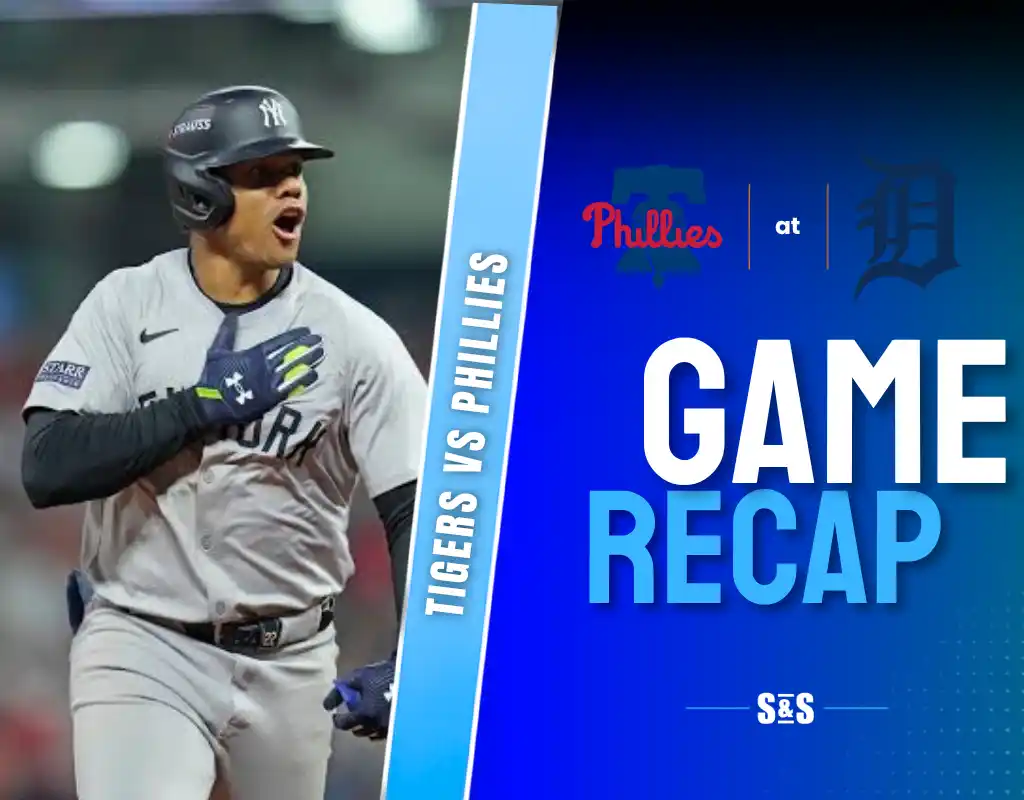

Table of Contents
The Tigers vs Phillies recap starts with a favorite-side result that never looked cheap by the finish: Detroit 10, Philadelphia 2. The Tigers entered the July 10 matchup as a short home favorite, and the final score showed why the market leaned toward Detroit despite Aaron Nola’s career success against the Tigers.
The pregame betting expectation was built around form and starting-pitcher correction. Detroit had won five straight entering the opener, Jack Flaherty had just delivered a scoreless start against Texas, and Philadelphia was trying to keep its wild-card position stable before the All-Star break. The game rewarded Tigers moneyline bettors because Detroit got length from Flaherty, early power from Kevin McGonigle, and a sixth-inning explosion that exposed the Phillies bullpen.
For bettors tracking the MLB preview board, this was not a subtle lesson. Philadelphia had enough name value to tempt plus-money buyers, but Detroit had the sharper full-game path. The Tigers paired starting-pitcher stability with lineup depth, while the Phillies’ bullpen turned a competitive game into a rout in one inning.











Go Inside the Handicappers’ Playbook
All in one spot. Real-time line moves, sharp reads, and verified edges.
Detroit Tigers vs Philadelphia Phillies Game Recap
| Game Detail | Result |
|---|---|
| Final Score | Detroit Tigers 10, Philadelphia Phillies 2 |
| Game Date | July 10, 2026 |
| Venue | Comerica Park |
| Scheduled Starters | Jack Flaherty vs Aaron Nola |
| Pregame Moneyline | Tigers -118, Phillies +108 |
| Key Betting Result | Tigers moneyline bettors were rewarded |
The ScoresAndStats preview made Detroit’s favorite case easy to understand. The Tigers had built momentum with a sweep of Oakland, Flaherty was coming off a strong start, and the Phillies were sending out Nola while he was still trying to reset a difficult season. The price was not heavy, but it asked a clear question: was Detroit’s form real enough to trust against a playoff-caliber National League opponent?
The first answer came quickly, though not from Detroit. Derek Hill opened the scoring for Philadelphia with a solo home run, giving Phillies backers the early plus-money look they wanted. That kind of first punch matters in a short-line game. When the underdog scores first on the road, the favorite immediately has to prove the pregame edge was not just form chasing.
Detroit answered through McGonigle. His two-run homer in the third off Nola changed the scoreboard and the betting feel. The Tigers were no longer simply the hot home team trying to validate a small price. They had the lead, the crowd, and Flaherty settling into the type of outing that keeps a favorite ticket organized.
Philadelphia tied the game 2-2 in the fourth, which briefly restored the underdog case. At that moment, Nola had survived enough to keep the Phillies involved, and the game still looked like it could move toward a bullpen-and-one-swing finish. That was the last point where Philadelphia’s moneyline ticket had a realistic structure.
The sixth inning destroyed it. Tim Mayza entered and could not record an out, allowing five runs as Detroit turned a 2-2 game into a 7-2 lead. Eduardo Valencia delivered the go-ahead RBI, James Outman supplied a triple, and a balk added to the inning’s damage. That was not just a rally. It was the market result. Detroit went from short favorite in a tie game to a team with full scoreboard command.
The Tigers kept adding in the seventh. Colt Keith homered on his birthday, and Spencer Torkelson followed with a two-run shot to widen the gap. At that point, the ticket was no longer about whether Detroit could hold a lead. It was about how badly Philadelphia’s relief staff had failed to protect a competitive game.
Flaherty finished with six innings of two-run work, and the Detroit bullpen handled the rest. Philadelphia’s night got so far away that catcher Garrett Stubbs worked a clean eighth inning as a position player pitcher. This Tigers vs Phillies recap is a clean favorite-side lesson: short chalk is playable when the starter keeps the game stable and the opposing bullpen has real collapse risk.
Key Stats That Explain the Tigers vs Phillies Recap Betting Result
The first key stat is the final score: Tigers 10, Phillies 2. An eight-run margin removes most of the market ambiguity. Detroit did not merely win as a short favorite. The Tigers turned the game into a blowout and made the -118 price look light by the final innings.
Flaherty’s six innings of two-run baseball were the foundation. He did not have to be perfect after Hill’s early homer, but he did have to avoid letting Philadelphia stack innings. He did that. The Phillies tied the game once, yet Flaherty kept the damage contained long enough for Detroit’s offense to take over.
Nola’s outing was more nuanced. He gave Philadelphia five innings, allowed two runs, and struck out eight. That was not the reason the Phillies lost by eight. The problem was what happened after him. This distinction matters for bettors because a starting-pitcher handicap can be mostly reasonable while the full-game side still fails badly because of bullpen exposure.
The sixth inning was the decisive stat. Five Detroit runs in that frame changed the game state entirely. Valencia’s RBI, Outman’s triple, and the balk sequence created the kind of inning that punishes underdog bettors who were relying on the bullpen to hold a tie. Philadelphia’s relief bridge broke before the game could reach a normal late-inning shape.
The seventh inning added the margin. Keith’s solo homer and Torkelson’s two-run homer pushed the Tigers from comfortable to finished. Those runs mattered for run-line bettors and for anyone evaluating whether Detroit’s offense was simply lucky in one inning. It was not. The Tigers kept swinging after the game had tilted.
For bettors using the betting process, the stat lesson is straightforward: a short favorite becomes much stronger when it can win the starter phase and then punish the weakest part of the opponent’s staff. Detroit did both.
Betting Market Results
| Market | Betting Takeaway |
|---|---|
| Detroit Moneyline -118 | Won comfortably as the Tigers turned a tie game into an eight-run victory |
| Philadelphia Moneyline +108 | Lost despite the Phillies scoring first and tying the game in the fourth |
| Run Line | Tigers-side run-line positions were strongly supported by the eight-run margin |
| Game Total | The 12-run final leaned toward over-style results, but the exact posted total should be verified before calling a specific ticket a winner |
| Phillies Bullpen Angle | Philadelphia’s relief collapse made the plus-money side unplayable after the sixth |
The cleanest market result was Detroit’s moneyline. The Tigers were listed at -118 and won by eight. That is a strong favorite result because bettors did not pay a premium price. They paid a short number and got a blowout.
Philadelphia’s +108 moneyline had moments where it looked live. Hill homered early, and the Phillies tied the game in the fourth. But a live underdog still needs a bullpen that can carry the game into leverage innings. Philadelphia did not have that on July 10.
The run line clearly favored Detroit because of the eight-run margin, though exact pricing depends on the posted market. The total should be handled carefully. Twelve runs created a high-scoring final, but bettors using a sportsbook comparison process still need the exact number before calling a specific over ticket a verified winner.
For anyone comparing current MLB betting opinions, the takeaway is direct: Detroit was not just the better recent-form side. It was the side with the cleaner full-game construction once Philadelphia had to leave Nola and trust the bullpen.
Game Analysis
The game turned because Detroit handled the early punch and then owned the middle innings. Hill’s solo homer could have made the Tigers press, especially with Nola on the mound. Instead, Detroit stayed patient enough to create the McGonigle swing and put pressure back on Philadelphia.
McGonigle’s homer mattered because it changed the market from Phillies-upset script to Tigers-control script. A two-run homer from a young hitter in a high-profile interleague game carries more than highlight value. It tells bettors the favorite has multiple offensive answers, not just one established bat expected to carry the lineup.
Philadelphia’s fourth-inning answer kept the game honest, but it also exposed the gap between tying a game and controlling it. The Phillies got back to 2-2, yet they did not force Flaherty out early, did not create a multi-run inning, and did not make Detroit use its bullpen before the Tigers were ready.
The sixth inning was where the handicap became obvious. Mayza entered a tie game and immediately put Philadelphia behind. When a reliever gives up five runs without recording an out, there is no subtle market explanation needed. The Phillies lost the inning so badly that the rest of the game became damage control.
Detroit’s seventh-inning power made the result more meaningful. A 7-2 final would already have cashed the side cleanly. Keith and Torkelson made it 10-2, and that extra margin matters for bettors grading run-line decisions or evaluating whether Detroit’s offense had genuine carryover from its Oakland sweep.
The handicapper evaluation angle is simple. Detroit had the better current form, the steadier starter trend, and the more reliable full-game path. Philadelphia had Nola’s name, early contact, and a plus price. Only one of those profiles survived the bullpen innings.
Why Detroit Rewarded Favorite Bettors
Detroit rewarded favorite bettors because the Tigers played like a team whose short price was built on more than momentum. Flaherty stabilized the game, McGonigle delivered early power, Valencia and Outman drove the sixth-inning rally, and Keith and Torkelson supplied late separation.
The biggest difference was lineup depth. Detroit did not need one bat to carry the entire result. McGonigle, Valencia, Outman, Keith, and Torkelson all played into the run production. That kind of spread-out offense matters because it makes a favorite less fragile. If one hitter misses a chance, another can still change the inning.
The Tigers also showed why form can matter when it is backed by baseball logic. Winning five straight before this game did not automatically make Detroit playable. Pairing that form with Flaherty’s improving trend and Philadelphia’s bullpen vulnerability did. That is the difference between betting a streak and betting a matchup.
Readers using the recap archive should file this as a process-driven favorite win. Detroit did not need a miracle inning to escape. It used the middle of the game to expose the exact part of the Phillies roster that could not hold up.
Why Philadelphia’s Bullpen Collapse Broke the Ticket
Philadelphia’s bullpen collapse broke the ticket because Nola had done enough to keep the Phillies live. Five innings, two runs, and eight strikeouts gave Philadelphia a chance. The Phillies were not buried after the starter phase. They were tied.
That is why the sixth inning was so damaging. Mayza entered with the game sitting at 2-2 and left it effectively lost. Five runs without recording an out is not just a bad relief outing. It is a complete market flip. Phillies bettors went from holding a live plus-money ticket to needing a major comeback against a Tigers team with momentum and a settled pitching plan.
The seventh inning made the bullpen issue look even worse. Max Lazar allowed more damage, including homers from Keith and Torkelson. Once that happened, Philadelphia had no practical comeback path. The Phillies had moved from competitive to buried in two innings.
This is why bullpen trust must be part of every full-game handicap. A bettor can like the underdog starter and still lose badly if the relief bridge is unstable. Philadelphia’s starter held the game together. The bullpen broke it apart.
Anyone applying market discipline should remember this profile. Plus-money teams are attractive only when they have enough structure to survive after the starter leaves. Philadelphia did not have that structure in this game.
Why the Sixth Inning Changed the Betting Market
The sixth inning changed the betting market because it took away every narrow-game argument Philadelphia had. Before that inning, the Phillies could point to a tie score, Nola’s strikeouts, and Detroit’s need to keep answering. After that inning, the only argument left was a comeback that never looked realistic.
Valencia’s go-ahead RBI was the first blow. Outman’s triple gave the inning real shape. The balk added the kind of avoidable run that drives underdog bettors crazy. Those moments combined into a five-run inning that did not feel like random scoring. It felt like a bullpen unraveling under pressure.
Detroit deserves credit for continuing the inning. Some teams receive a gift and settle for one run. The Tigers kept pushing. That matters because the difference between a 3-2 lead and a 7-2 lead is enormous for betting. One is a sweat. The other is command.
For future work through MLB matchup context, this game is a reminder to identify which team is better positioned once the starters exit. Detroit had the better answer. Philadelphia had the bigger problem.
What the Stats Say for Future Matchups
The repeatable signal from this Tigers vs Phillies recap is Detroit’s ability to turn a short favorite price into a strong result when Flaherty gives the lineup six competitive innings. The Tigers’ offense has enough depth to punish middle relief, and the bullpen can finish comfortably when the starter gives it a lead with margin.
The fragile signal is the blowout margin. A 10-2 win does not mean Detroit should automatically be trusted at any price. Eight-run wins can inflate perception quickly. Bettors should upgrade the Tigers carefully, focusing on matchups where the starter is stable and the opposing bullpen has clear stress points.
For Philadelphia, the repeatable concern is relief volatility. Nola kept the Phillies in the game, but the bullpen erased that work quickly. That issue matters in future full-game moneyline bets, especially when Philadelphia is priced around even money or as a short underdog.
The fragile concern is Nola himself. This was not a meltdown start. He struck out eight and gave the Phillies five usable innings. Bettors should not treat the final score as proof Nola was the problem. The problem was what happened once he left.
The future betting angle is direct. When Detroit is a short favorite with Flaherty or another starter capable of length, the Tigers deserve a strong look if the opposing bullpen is vulnerable. When Philadelphia is catching a small plus price, bettors need to ask whether the bullpen can protect the starter’s work. Use the betting process, compare the number, and remember what this 10-2 finish showed: the Phillies had the first punch, but Detroit had the full-game ticket.