NFL Previews
  MLB Previews
  NBA Previews
  NHL Previews
  Soccer Previews
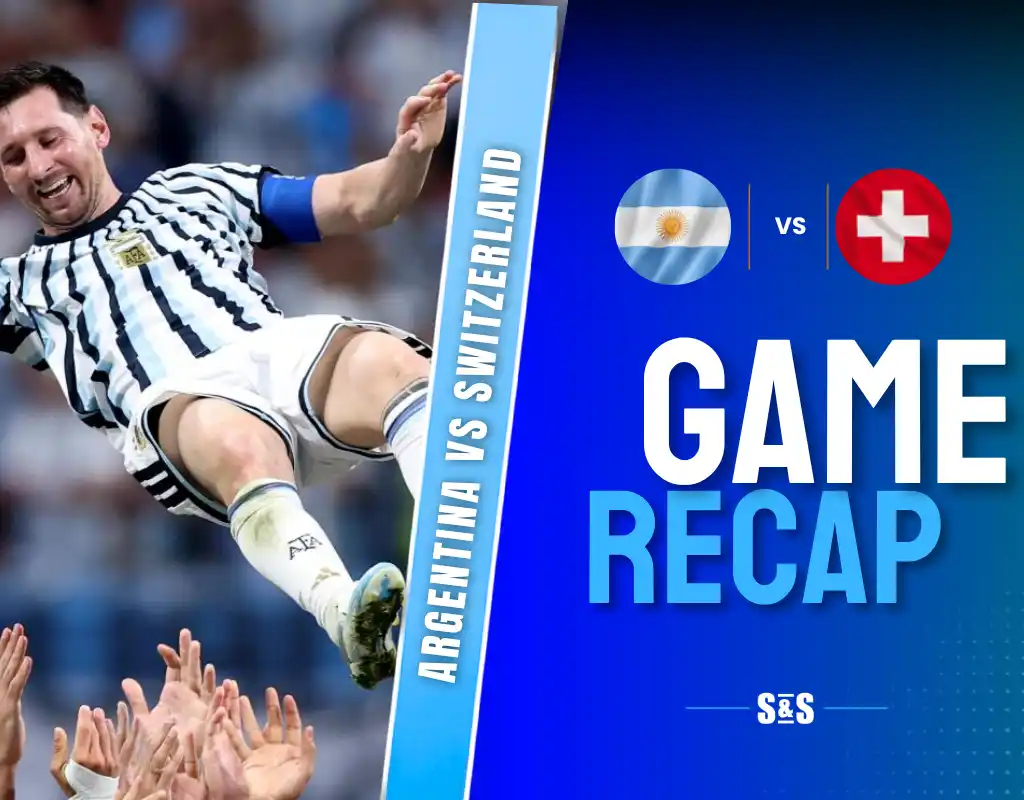

Table of Contents
Argentina vs Switzerland ended 3-1 for Argentina after extra time, but this was not the clean favorite result that the final margin suggests. Alexis Mac Allister put Argentina ahead, Dan Ndoye pulled Switzerland level, and the defending champions needed extra-time goals from Julián Álvarez and Lautaro Martínez to move into the World Cup semifinals.
The original ScoresAndStats preview made Argentina moneyline at -145 the best bet inside regulation, with Switzerland at +450, the draw at +255, and the total listed at 2.5 goals. That pregame position had logic because Argentina owned the stronger attacking ceiling, but the match punished anyone who treated the regulation favorite price as safe. Bettors following the broader soccer preview board saw the real question before kickoff: could Argentina solve Switzerland’s compact block before extra time became part of the story?
For bettors, this Argentina vs Switzerland recap is a clean reminder that knockout soccer is not only about picking the better team. Argentina advanced, but the 90-minute moneyline failed. Draw backers were rewarded in regulation, Switzerland +0.5 bettors had the right handicap side, and Argentina-to-advance style positions were the cleaner way to express confidence in the stronger squad.

Go Inside the Handicappers’ Playbook
All in one spot. Real-time line moves, sharp reads, and verified edges.
Argentina vs Switzerland Match Recap
| Match Detail | Result |
|---|---|
| Final Score | Argentina 3-1 Switzerland after extra time |
| Regulation Score | Argentina 1-1 Switzerland |
| Argentina Goals | Alexis Mac Allister, Julián Álvarez, Lautaro Martínez |
| Switzerland Goal | Dan Ndoye |
| Venue | Kansas City Stadium, Kansas City |
| Key Betting Result | Argentina advanced, but the regulation moneyline lost |
Argentina started the way favorite bettors wanted. Mac Allister’s opener gave the defending champions the lead and appeared to validate the preview’s regulation-moneyline angle. With Lionel Messi influencing the setup and Argentina controlling the early emotional tone, the match looked like it could follow the expected script: Argentina possession, Swiss resistance, eventual favorite control.
Switzerland changed that script by staying organized and finding the equalizer through Ndoye. That goal was the match’s betting hinge. It moved Argentina from a controlled favorite position into a more uncomfortable chase, revived draw tickets, strengthened Switzerland handicap positions, and exposed the difference between “Argentina are likely to advance” and “Argentina are likely to win inside 90 minutes.”
The Swiss block made Argentina work for central access. Switzerland did not need to dominate possession to beat the pregame number. They needed to defend compactly, slow the tempo, and create one moment that forced Argentina to solve the match twice. That is exactly what happened. Argentina had the higher ceiling, but Switzerland made the favorite pay for every clean look.
Argentina finally separated in extra time through Álvarez and Lautaro. That late attacking depth is why Argentina remain dangerous in advance markets, but the path matters for bettors. A 3-1 final after extra time reads comfortable in a scoreline box. It was not comfortable for anyone holding the regulation moneyline. A disciplined betting process separates final result from ticket result, and this match demanded that separation.
Key Match Factors That Explain the Betting Result
The most important betting factor was the regulation draw state. Argentina led early, but Switzerland’s equalizer meant the preview’s best bet needed another Argentina goal before 90 minutes. That goal never arrived. The favorite still advanced, but the market condition failed. In soccer betting, that is not a minor detail. It is the ticket.
Switzerland’s defensive structure also explained why the underdog handicap held up. The Swiss made Argentina circulate the ball, defend transition risk, and chase the decisive goal against a block that did not collapse after falling behind. That mattered because Argentina’s price was not based only on talent. It was based on the assumption that talent would translate quickly enough inside regulation.
Argentina’s late attacking depth was the strongest winning signal. Mac Allister, Álvarez, and Lautaro all scored, which shows Argentina are not dependent on one finisher. That matters for future advance markets because Argentina can survive a match even when the first script breaks. The fragile part is that they needed extra time after scoring first.
Switzerland’s best repeatable signal was not the final score. It was the ability to keep a World Cup favorite uncomfortable for 90 minutes. Bettors reviewing future knockout matches through the recap archive should treat that as a useful reminder: a disciplined underdog can lose the match and still be the right handicap side.
Betting Market Results
| Market | Betting Takeaway |
|---|---|
| Argentina Moneyline -145 | Lost because Argentina did not win inside regulation |
| Switzerland Moneyline +450 | Lost because Switzerland did not win the match |
| Draw +255 | Won because the match was 1-1 after 90 minutes |
| Switzerland +0.5 | Cashed in regulation because Switzerland avoided a 90-minute loss |
| Under 2.5 Goals | Won under standard 90-minute settlement with the regulation score at 1-1 |
| Argentina to Advance | Rewarded bettors who used a knockout-market expression instead of the 90-minute moneyline |
This was a harsh result for Argentina regulation-moneyline bettors because the team won the match but lost the listed best bet. That is the soccer market lesson. Argentina were the better long-form side, but Switzerland were good enough over 90 minutes to beat the favorite price.
The draw at +255 and Switzerland +0.5 were the sharper regulation results. The total also leaned under in standard 90-minute grading, even though the full match eventually reached four goals after extra time. Bettors comparing knockout markets through sportsbook comparison should always check settlement rules before treating the final score as the market result.
Game Analysis: Why Argentina Advanced Without Rewarding the Best Bet
Argentina advanced because their late attacking quality was stronger than Switzerland’s resistance. That part is straightforward. The more useful betting detail is that Argentina needed 120-minute problem-solving, not 90-minute control. When a favorite scores first and still fails to win inside regulation, the market has to downgrade the ease of that favorite profile.
Mac Allister’s goal gave Argentina the ideal platform, but the champions did not fully turn that early advantage into match control. Switzerland stayed patient, kept the middle crowded, and waited for the right moment to strike. Ndoye’s equalizer did not just tie the match. It changed the risk profile of every Argentina ticket that needed a regulation result.
Messi’s influence still mattered because Switzerland had to respect his set-piece delivery, passing lanes, and gravity between the lines. But Argentina did not turn that influence into enough regulation separation. The Swiss made Argentina rely on later waves, substitutions, and extra-time pressure. That is a different betting read from the pregame idea that Argentina’s possession edge would eventually land inside 90 minutes.
For bettors using handicapper evaluation, this is the kind of match where the final score can fool casual readers. Argentina by two after extra time sounds convincing. Argentina 1-1 Switzerland after regulation is the market truth for the preview’s best bet. The team won. The bet lost.
Why Switzerland Were the Right Underdog to Respect
Switzerland were the right underdog to respect because their best qualities translated directly into the betting market. They defended compactly, slowed Argentina’s central rhythm, and created enough attacking threat to force a draw after 90 minutes. That is exactly what an underdog plus-half-goal ticket needs.
The key was emotional stability after conceding first. Many underdogs lose their structure when an elite favorite scores early. Switzerland did not. They kept the match within one moment, and Ndoye supplied that moment. Once the score moved to 1-1, the entire betting board changed. Argentina still had the stronger extra-time profile, but Switzerland had already beaten the regulation favorite case.
That is why the final margin should not lead bettors to dismiss Switzerland’s performance. The Swiss did not have the same late attacking ceiling once the match stretched, but they had already proved the pregame warning: Argentina could be the better team and still be a fragile 90-minute favorite.
The future betting lesson is not to auto-bet Switzerland. It is to understand when their structure has market value. Against public favorites, especially in knockout formats, Swiss handicap positions can be worth a look when the price gives them room to defend, absorb pressure, and keep the match alive. That is market discipline, not blind underdog hunting.
Why Argentina’s Advance Profile Still Deserves Respect
Argentina’s advance profile still deserves respect because the champions showed multiple scoring routes. Mac Allister opened the scoring, Álvarez produced the extra-time breakthrough, and Lautaro finished the job. That spread of contributors matters. It means Argentina can win even when the match does not become a Messi scoring showcase.
The concern is price. Argentina’s next market will include the glow of a 3-1 final and the weight of another semifinal appearance. Bettors should be careful if that pushes the regulation price too far. The same team that advanced with quality also failed to close a 90-minute moneyline after scoring first.
That makes Argentina better suited to market selection than blind backing. To advance, draw-no-bet, or shorter handicap positions may fit certain matchups better than a three-way moneyline if the opponent can defend compactly and create transition pressure. Future bettors should use soccer matchup context to ask whether Argentina’s next opponent can create the same uncomfortable middle phase Switzerland created.
What the Stats Say for Future Matchups
The Argentina vs Switzerland recap starts with a repeatable Argentina signal: late attacking depth. Mac Allister, Álvarez, and Lautaro scoring in the same knockout match is a real strength. Argentina are not a one-route team, and that makes them dangerous when matches stretch beyond the initial tactical plan.
The fragile Argentina signal is regulation control. Argentina scored first and still needed extra time. That matters for any future market asking bettors to lay a short price inside 90 minutes. The champions can advance without giving regulation bettors a clean result. That difference should stay at the center of the next handicap.
For Switzerland, the repeatable signal is defensive organization. Their structure kept the match level through regulation and rewarded draw and plus-handicap positions. The fragile signal is extra-time survival. Once Argentina found the second goal, Switzerland did not have enough attacking push to flip the match again.
The most relevant future betting angle is to separate team strength from market type. Argentina can be a strong advance-market side and a risky regulation favorite at the same time. Switzerland can lose the match and still be a profitable handicap side. Before backing the next favorite in a knockout setting, compare the number, settlement rules, and match script through the betting guide framework. For one outside board check, bettors can also compare soccer betting coverage, but the core lesson is already clear: Argentina advanced, while the preview’s regulation moneyline did not.