NFL Previews
  MLB Previews
  NBA Previews
  NHL Previews
  Soccer Previews
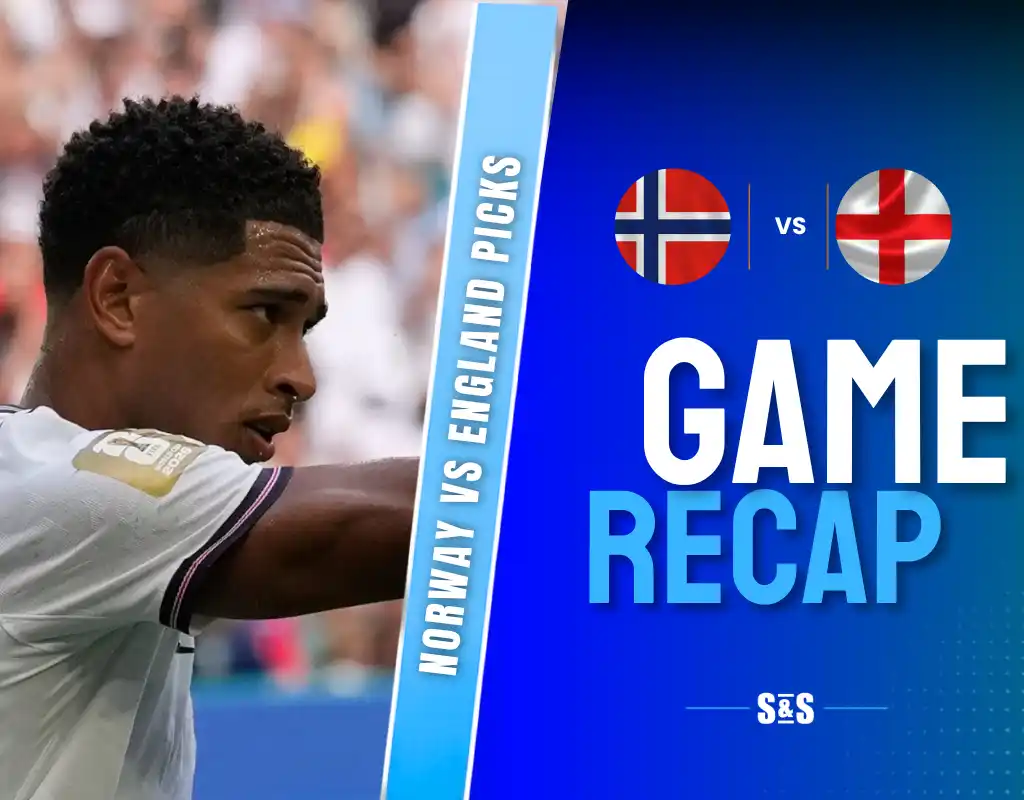

Table of Contents
The Norway vs England recap starts with the clean final score and the messy betting result: England beat Norway 2-1 after extra time, but the preview’s 90-minute England moneyline did not get there. Andreas Schjelderup put Norway ahead, Jude Bellingham dragged England level, and Bellingham struck again in extra time to send England into the World Cup semifinals.
The original ScoresAndStats preview listed England as the 90-minute favorite at -120, Norway at +300, the draw at +270, England -0.5 at -120, Norway +0.5 at -115, and the total at 2.5 goals. That made the pregame question sharp: could England control Norway’s Haaland-led scoring route and still win inside regulation? Bettors tracking the broader soccer preview board had the right framework before kickoff. The better team was not automatically the better ticket.
England advanced, so advance-market bettors were rewarded. But regulation moneyline and England -0.5 bettors were punished because the match finished 1-1 after 90 minutes. Norway +0.5 and draw backers had the better regulation market result, while the biggest lesson was simple: knockout soccer demands market discipline, not just team-name confidence.

Go Inside the Handicappers’ Playbook
All in one spot. Real-time line moves, sharp reads, and verified edges.
Norway vs England Match Recap
| Match Detail | Result |
|---|---|
| Final Score | England 2-1 Norway after extra time |
| Regulation Score | Norway 1-1 England |
| England Goals | Jude Bellingham, 2 goals |
| Norway Goal | Andreas Schjelderup |
| Venue | Hard Rock Stadium, Miami Gardens, Florida |
| Key Betting Result | England advanced, but the 90-minute moneyline failed |
Norway gave underdog bettors the start they needed. Schjelderup’s goal put England into a chase script, which was exactly the risk identified in the preview. England had the deeper squad and the stronger wide attacking routes, but Norway had a clear counterpunch through Erling Haaland, Martin Odegaard, and direct service into dangerous areas. Once Norway scored first, the match stopped being about England’s theoretical edge and became about whether England could solve the game state before regulation ran out.
Bellingham’s equalizer rescued England from immediate danger, but it did not rescue the 90-minute market. The match remained tense, stretched, and uncomfortable. Norway did not need to dominate possession to make the favorite price fragile. The underdog needed one goal, a compact block, and enough threat to prevent England from throwing numbers forward without consequence.
That is why this match was so important for bettors. England’s talent eventually decided the tie, but only after the regulation markets had already been graded. Bellingham’s extra-time winner was massive for England’s tournament path and for anyone who backed England to advance. It was no help to bettors who followed the preview’s best bet on England to win in 90 minutes.
The distinction matters. A bettor using a clean betting process would not just ask whether England were more likely to win the match. The sharper question was whether England were more likely to win within the exact market condition being priced. Norway’s goal made that condition much harder.
Key Match Factors That Explain the Betting Result
The most important betting factor was Norway scoring first. That single moment changed the shape of every regulation ticket. England -120 on the 90-minute moneyline needed a response and a second goal before full time. England -0.5 needed the same thing. Norway +0.5 suddenly had the perfect match state: a lead, a compact defensive plan, and a favorite forced to chase.
The second factor was Bellingham’s individual quality. England did not produce a smooth favorite performance, but Bellingham gave the team the two moments that mattered. His equalizer kept England alive, and his extra-time winner turned survival into advancement. From a betting standpoint, that creates two separate reads. England’s elite individual quality is real, but relying on late individual brilliance is not the same as controlling a 90-minute favorite ticket.
The third factor was Norway’s ability to keep Haaland relevant without needing him to score. The preview focused heavily on whether England could contain Haaland’s direct scoring route. England did enough to keep him from taking over the match, but Norway still found the opener through Schjelderup and forced England to respect the broader attacking structure. That made Norway more than a one-player underdog.
The fourth factor was the knockout format. A quarter-final does not always reward the side that looks better on paper. It rewards the side that manages pressure, survives mistakes, and finds decisive moments. For future readers going through the recap archive, this match is a clean example of why regulation markets and advancement markets must be treated as separate bets.
Betting Market Results
| Market | Betting Takeaway |
|---|---|
| England Moneyline -120 | Lost because England did not win inside 90 minutes |
| Norway Moneyline +300 | Lost because Norway did not win the match |
| Draw +270 | Won because regulation ended 1-1 |
| Norway +0.5 (-115) | Cashed because Norway avoided a 90-minute loss |
| England -0.5 (-120) | Failed because England needed extra time to win |
| Over 2.5 Goals (-135) | Lost under standard 90-minute settlement with the match 1-1 after regulation |
The market result was a sharp warning for favorite bettors. England won the match, but the listed best bet lost. That is not a contradiction. It is how soccer markets work. Three-way moneyline bets are tied to 90 minutes unless otherwise stated, and England did not satisfy that condition.
Norway +0.5 and the draw were the stronger regulation positions. Under 2.5 also cashed under standard 90-minute settlement because the match had only two goals after regulation, even though the full match reached three goals after extra time. Bettors comparing knockout prices through sportsbook comparison should always check settlement rules before assuming the final scoreboard tells the whole betting story.
Game Analysis: Why England Advanced Without Rewarding the Best Bet
England advanced because Bellingham supplied the decisive quality that separates elite teams in knockout matches. That part is real. The market problem is that England did not create enough clean separation inside the 90-minute window. They trailed, equalized, and then needed extra time. That sequence is good enough for tournament survival but not good enough for the preview’s best-bet condition.
Norway’s opener forced England to play from an uncomfortable position. A favorite that concedes first has to balance urgency with control. Push too hard and the underdog gets counterattacking lanes. Stay too cautious and the clock becomes the opponent. England lived in that middle ground for long stretches, and Norway’s structure made the decision even harder.
The match also showed why the preview’s caution around England’s defensive reshuffle mattered. Norway did not need a huge volume of attacks to threaten the favorite. The underdog had enough pace, directness, and star gravity to make England defend backward. That pressure kept England from turning the match into a controlled possession exercise.
For bettors using handicapper evaluation, the best read is not to say the preview was completely wrong or completely right. The preview correctly identified England’s edge and Norway’s counterpunch. The market recommendation failed because the edge was too thin for the regulation condition once Norway scored first. That is the kind of distinction good betting analysis has to make.
Why Norway Were the Right Underdog to Respect
Norway were the right underdog to respect because their path translated directly into the betting market. They did not need to win the possession battle. They did not need to turn the match into a full attacking showcase. They needed to create one meaningful lead, defend compactly, and force England to solve the match under time pressure.
Schjelderup’s goal gave Norway that platform. From there, Norway could protect central areas, keep Haaland as a reference point, and make England think twice before committing too many players forward. That is why Norway +0.5 was a strong regulation result. The handicap did not require Norway to be better than England over the full match. It required Norway to stay level or ahead after 90 minutes.
The limitation is that Norway did not finish the job once the match stretched. Bellingham’s extra-time goal broke the underdog script, and Norway could not find the second goal needed to force penalties. That does not erase the value of the handicap performance. It simply shows the difference between a good underdog regulation ticket and an outright upset.
Future bettors should avoid turning this into a lazy underdog lesson. Norway were not valuable just because they were plus money. They were valuable because the matchup gave them a real scoring route and the number gave them room. That is market discipline, not blind underdog chasing.
Why England’s Advance Profile Still Deserves Respect
England’s advance profile still deserves respect because the team found a way through a bad game state. Knockout soccer is not always clean. England trailed, absorbed pressure, and still had the individual quality to win before penalties. Bellingham’s two-goal performance gives England a repeatable late-match weapon because he can arrive in the box, finish under pressure, and change the match without needing England to dominate every phase.
The concern is price. England were listed at -200 to advance in the preview, and that market ultimately rewarded bettors who were willing to pay for the extra-time and penalty cushion. But the regulation moneyline was the cleaner value expression only if England could win inside 90 minutes. They could not. That makes future England pricing more delicate.
England remain dangerous because they have multiple attacking routes through Bellingham, Harry Kane, wide speed, and bench options. But bettors should be careful when the market asks them to lay a short regulation number against teams that can defend compactly and threaten on the counterattack. England can win the match and still fail the most aggressive market expression.
That is the main takeaway for the next round. Use the soccer matchup context to decide whether England’s next opponent can create a similar first-goal threat or force England into another stretched chase. The team is strong. The price still has to be right.
What the Stats Say for Future Matchups
The Norway vs England recap points to one repeatable England signal: late attacking quality. Bellingham scoring both goals is not just a highlight. It tells bettors that England have a central match-winner who can rescue broken scripts. That matters in advance markets, draw-no-bet positions, and live situations where England are not playing their cleanest football.
The fragile England signal is regulation control. England entered as the 90-minute favorite, conceded first, and needed extra time. That should make bettors cautious if the next market prices England as if they will control the match from kickoff. England can survive a difficult game state, but survival and a regulation cover are different outcomes.
For Norway, the repeatable signal is underdog danger. The attacking route through Haaland, Odegaard, and supporting runners remains credible, and Schjelderup’s goal showed that Norway can hurt elite opponents without needing to dominate possession. The fragile signal is late-match survival once the favorite increases pressure. Norway held England through 90 minutes but could not protect the match through extra time.
The most relevant future betting angle is market selection. England to advance can make sense when the matchup supports their depth and finishing edge, but England 90-minute moneyline and England -0.5 positions require more caution against teams with real transition threat. Norway can be useful in plus-handicap markets when the number gives them room to defend and counter. Before betting the next knockout favorite, compare settlement rules, price, and match script through the betting guide framework. For one outside board comparison, bettors can also check soccer betting coverage, but the core lesson is already clear: England advanced, while the 90-minute favorite ticket failed.