NFL Previews
  MLB Previews
  NBA Previews
  NHL Previews
  Soccer Previews
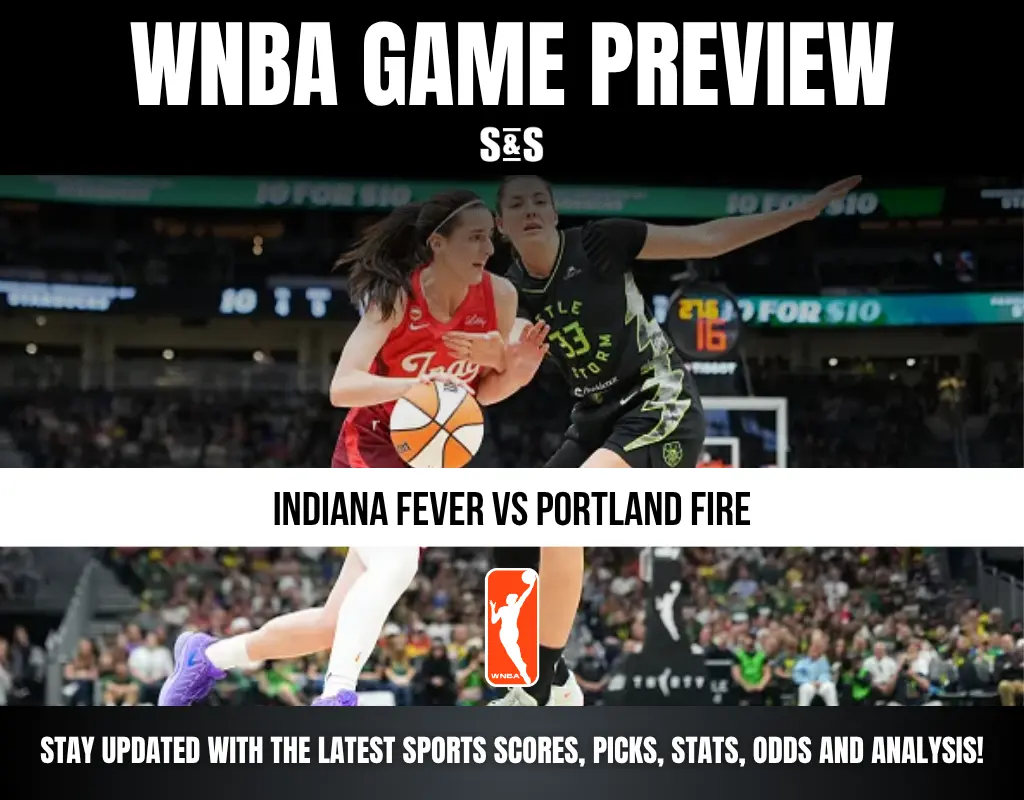

Table of Contents
Indiana Fever vs Portland Fire Picks, Predictions and Odds: Which matchup factor matters most?
Indiana Fever visits Portland Fire on Friday, July 31, 2026, in a matchup that belongs on the broader WNBA picks and previews board because the price is closely tied to pace, rotation health and possession control. Indiana enters 18-10; Portland enters 11-17. Tipoff is scheduled for 10:00 p.m. ET at Moda Center in Portland, Oregon. The central betting question is whether the favorite can create enough clean possessions to justify the current spread without depending on unsustainable shooting.
Basketball first, bet second. The handicap starts with who controls the glass, who protects the ball and which rotation can survive the non-star minutes. Those details determine whether the game stays within the spread, reaches the posted total or turns into a late-possession contest.
Game Info: How does the schedule spot shape the handicap?
- Game: Indiana Fever vs Portland Fire
- League: WNBA regular season
- Date: Friday, July 31, 2026
- Tipoff: 10:00 p.m. ET
- Arena: Moda Center
- Location: Portland, Oregon
- Broadcast: ION
- Records: Indiana enters 18-10; Portland enters 11-17.
Neither team is on a same-day turnaround, but recent travel and rotation concentration still matter. The road team must establish its preferred pace before the home bench can change the matchup. Late injury designations also carry more weight than usual because they affect primary creation, defensive assignments and the number of reliable closing options.
Indiana Fever vs Portland Fire Odds: Is the current number still playable?
FanDuel/market consensus prices recorded the morning of July 31 list Indiana -8.5 with the total rising from 181 to 188.5. The market should be read through the betting odds framework rather than as a prediction by itself: every half-point changes the required cover probability, and heavy moneyline juice can remove value even when the favorite is likely to win.
| Team | Moneyline | Spread | Total Points |
|---|---|---|---|
| Indiana Fever | -350 | -8.5 (-110) | Over 188.5 (-111) |
| Portland Fire | +275 | +8.5 (-110) | Under 188.5 (-110) |
The current number is playable only inside a narrow range. A bettor taking the underdog needs enough cushion to survive late fouling and free throws; a favorite backer needs enough offensive separation to avoid paying for the team name. The total requires both pace and shot quality, not simply a recent run of overs.
Head-to-Head and Recent Meetings: How relevant is the series history?
Recent meetings are useful only when the same core roles and tactical problems are present. The table below provides context, but current availability, current form and the present spread deserve more weight than older results.
| Date | Venue | Result | Context |
|---|---|---|---|
| May 30, 2026 | Portland | Fire 100-84 | Portland controlled the second meeting |
| May 20, 2026 | Indiana | Fever 90-73 | Indiana controlled the first meeting |
| 2002 and earlier | Various | Historic meetings | No current roster relevance |
The earlier results show that either side can control a matchup when it wins the possession battle. They do not remove today’s uncertainty because rotations, injuries and market expectations have changed. Head-to-head history is supporting evidence, not the foundation of the wager.
Indiana Fever Recent Form: What is driving the road team’s current level?
Indiana has won four straight and scored at least 105 in each victory. The Fever average a league-best 95.8 points, and their three All-Stars have combined for 62.1 points per game. Caitlin Clark averages 21.5 points and 7.9 assists for the season and 30.3 points during the winning streak. Kelsey Mitchell adds 23.5 points, while Aliyah Boston contributes 17.1 points and 8.2 rebounds. Indiana has shot at least 50% and made 10 or more threes in each game of the streak. That combination creates a brutal choice for Portland: protect the paint against Boston and invite Clark-Mitchell pull-ups, or stay attached outside and allow downhill drives. The concern is availability, because Boston left Tuesday with a lower-leg issue and Clark is managing a back designation.
For the spread, the road team’s best path is to protect the ball, avoid extended empty-possession stretches and force the home side to score against a set defense. That keeps the fourth quarter within the range where the current number matters.
Portland Fire Recent Form: Can the home team sustain its current profile?
Portland has lost three straight and is 1-4 over its last five, scoring 83, 97, 93, 75 and 87 while allowing 98, 101, 101, 56 and 90. That is 87.0 points scored and 89.2 allowed, with four of the five clearing their closing totals. Carla Leite averages 15.2 points and 5.9 assists, Bridget Carleton adds 13.7 points, and Megan DiLeo supplies 12.8. Portland’s offense can score enough to contribute to a high total, but the Fire have struggled to prevent elite teams from starting fast. They allowed Las Vegas to open 12-of-15 from the field and fell behind by 15 in the first quarter Tuesday. The season-ending loss of Sarah Ashlee Barker removes 10.7 points, secondary handling and wing defense from an already stressed rotation.
The home team’s market case depends on turning its strongest repeatable skill into extra possessions. If that edge disappears, the game becomes more sensitive to three-point variance and late-clock creation.
Starting Lineups and Rotation Matchup: Where is the rotation pressure?
The lineups below are projected from current roles and recent usage rather than announced starters. The first matchup to watch is primary ball-handler pressure. The second is defensive rebounding, because one extra offensive board can erase a good initial possession. Bench minutes are also important: the team that can maintain spacing and ball security without its lead creator has the cleaner spread path.
Indiana Fever Projected Lineup
- Caitlin Clark
- Kelsey Mitchell
- Sophie Cunningham
- Monique Billings
- Aliyah Boston
Portland Fire Projected Lineup
- Carla Leite
- Karlie Samuelson
- Bridget Carleton
- Emily Engstler
- Megan DiLeo
Expect the coaches to shorten the rotation if the score stays tight. That increases the importance of foul trouble and makes secondary creation more valuable. It also raises the risk of fatigue late in the fourth quarter, especially for frontcourt players carrying both scoring and rebounding responsibilities.
Injuries and Player Availability: Which status changes the market most?
Indiana lists Aliyah Boston and Caitlin Clark as probable, Monique Billings as day-to-day and Damiris Dantas out. Portland is without Sarah Ashlee Barker for the season, while Sania Feagin and Jordan Harrison are out; Nyadiew Puoch and Teja Oblak are day-to-day. Boston’s probable tag is important because Indiana’s offensive ceiling and defensive rebounding are stronger with her on the floor. Barker’s absence reduces Portland’s wing depth and makes it harder to cover both Clark and Mitchell without overloading the remaining guards. Availability should be checked against the Indiana Fever injury report.
The betting impact is not limited to points per game. An absence can shift ball-handling, shot volume, defensive matchups, rebounding chances and closing minutes. That is why the playable range is more important than chasing a moved number after final status news.
Key Matchup Factors: Which possessions will decide the spread?
- Possession quality: Turnovers and live-ball mistakes can create the easiest points in the game.
- Rebounding: Limiting second chances is essential for the underdog and helps the favorite build separation.
- Shot profile: Rim attempts, free throws and open threes are more repeatable than contested midrange shooting.
- Bench stability: Non-star minutes can swing a spread before the closing lineup returns.
The expected script is a game in which the stronger offense creates the first separation, but the underdog remains live if it controls the glass and keeps turnovers manageable. Late fouling is the biggest total and spread accelerant, so the final two minutes can look very different from the first 38.

Find the best angles before kickoff.
Review today’s picks, trends, and betting opportunities.






Best Bet: Where does the price leave value?
Best Bet: Indiana Fever -8.5 at -110. The listed price carries an implied probability of 52.4%, while the matchup estimate is 57%. The bet is playable at Indiana -9 or better at -110 or less. Indiana owns the league’s best scoring offense, has reached 105 in four straight and has a clear perimeter creation advantage against a depleted Portland wing rotation. The Fever’s shooting forces Portland to defend every level, while Portland’s recent first-quarter defense creates blowout risk. Indiana also has two separate creators who can stabilize possessions if Portland traps Clark. The main risk is Boston’s lower-leg issue and the possibility that Indiana’s recent 50% shooting cools sharply. The expected script is competitive through the middle quarters, with the recommended side holding enough possession value to stay inside the number. Respect the limit; a move beyond it removes the cushion that creates the edge.
Three independent reasons support the wager: current scoring and possession form, the matchup’s rebounding or ball-security profile, and the rotation context reflected in the injury report. The primary risk is a shooting or availability swing that changes the game before the market can fully adjust.
Final Prediction: What game script is most likely?
Final Score Prediction: Indiana 101, Portland 89. The projected scoring environment reflects the current total, recent offensive form and the likely late-game pace. The decisive factors are possession quality, defensive rebounding and which team can preserve spacing when its lead creator rests. The main risk is late injury news or an extreme three-point result. The best bet remains Indiana Fever -8.5 at -110, but only within the stated playable range because the number matters as much as the basketball read.