NFL Predictions
  MLB Predictions
  NBA Predictions
  NHL Predictions
  Soccer Predictions
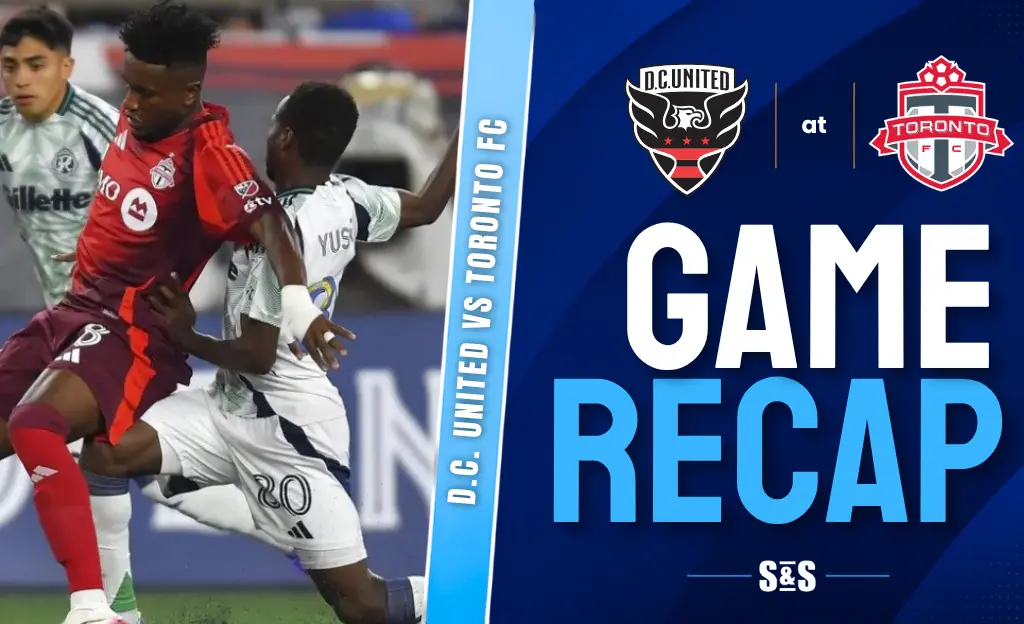

Table of Contents
The D.C. United vs Toronto FC recap starts with the scoreline the preview wanted: D.C. United 2, Toronto FC 1. ScoresAndStats made Both Teams to Score — Yes at -159 the best bet, and that market cashed when Theo Corbeanu equalized for Toronto before Tai Baribo converted a stoppage-time penalty to win it for D.C.
The pregame expectation was built around an open MLS match script. D.C. United were expected to have the initial territorial benefit at Audi Field, while Toronto still had enough wide progression and attacking pieces to contribute a goal. The risk was Toronto’s recent low shot-on-target rate and consecutive scoreless draws, but the match eventually broke through that concern.
That made this a clean betting result for BTTS backers, D.C. moneyline bettors, and anyone who trusted the projected 2-1 final score. For readers comparing soccer market structure through broader league odds analysis, the lesson is direct: a good BTTS position needs both teams to create credible danger, not just a favorite capable of scoring twice.

Find value before the match starts.
Check our picks.
D.C. United vs Toronto FC Match Recap
| Match Detail | Result |
|---|---|
| Final Score | D.C. United 2-1 Toronto FC |
| Goals | Kobe Franklin own goal 41’; Theo Corbeanu 76’; Tai Baribo penalty 90+10’ |
| Venue | Audi Field, Washington, D.C. |
| Key Betting Result | Both Teams to Score — Yes at -159 won |
| Best Market Result | BTTS Yes, D.C. moneyline, and D.C. -0.25 Asian handicap |
D.C. United and Toronto FC both showed the early danger the preview needed. The match did not begin as a cagey, low-event stalemate. Both goalkeepers were involved inside the opening 15 minutes, with Sean Johnson denying Toronto looks from Derrick Etienne Jr. and Dániel Sallói, while Luka Gavran kept out multiple efforts from Jackson Hopkins at the other end.
That opening stretch mattered for bettors because it supported the BTTS logic before the goals arrived. D.C. had the home pressure, but Toronto were not passive. They had enough wide movement and enough direct attacking threat to make the away goal plausible, even if their recent form made that part of the ticket feel fragile before kickoff.
The first goal came late in the opening half. Keisuke Kurokawa’s in-swinging corner found Kye Rowles, and the header took a deflection off Kobe Franklin before going into the Toronto net in the 41st minute. That pushed D.C. into the lead and rewarded the home-side part of the preview’s projected script.
Toronto’s response arrived in the 76th minute. After D.C. goalkeeper Sean Johnson had made several important second-half saves, Corbeanu finally finished the equalizer after Jonathan Osorio’s header from Walker Zimmerman’s cross was cleared off the goal line. At 1-1, the BTTS ticket was complete, and the match turned from a goal-market sweat into a three-way result battle.
The final swing came in stoppage time. After an in-stadium review, D.C. United were awarded a penalty in the 96th minute when Jackson Gilman was judged to have fouled Andre Dozzell. Baribo converted in the 100th minute, powering his attempt into the bottom-left corner. That goal turned a draw into a D.C. win, cashed the home moneyline, and completed the exact 2-1 scoreline projected in the preview.
Key Match Factors That Explain the Betting Result
The most important betting factor was that Toronto eventually found its goal. D.C. scoring at home was the more comfortable part of the handicap. The preview’s real stress point was whether Toronto’s low recent shot-on-target rate would produce another blank. Corbeanu’s 76th-minute equalizer solved that problem.
| Match Factor | Betting Impact |
|---|---|
| Early goalkeeper action | Confirmed both teams had enough attacking intent to support BTTS |
| D.C. goal in the 41st minute | Put the home side on track and opened the match state |
| Corbeanu equalizer in the 76th minute | Cashed the Both Teams to Score — Yes recommendation |
| Baribo penalty in the 100th minute | Moved D.C. moneyline and -0.25 handicap tickets from draw risk to winners |
The table shows why the betting result was not just about the final penalty. Baribo’s goal decided the winner, but Corbeanu’s finish decided the preview’s best bet. D.C. had the stronger late result, yet Toronto’s contribution was the key to the main market.
- D.C. scored first through a 41st-minute deflected corner sequence, matching the home-pressure expectation.
- Toronto answered in the 76th minute, cashing the Both Teams to Score — Yes angle.
- Sean Johnson’s second-half saves delayed Toronto’s equalizer and kept D.C. positioned for a late win.
- Tai Baribo’s 100th-minute penalty converted D.C.’s home edge into a full moneyline result.
The list explains the market cleanly. BTTS bettors needed one goal from each side. D.C. delivered through pressure and a set-piece sequence. Toronto delivered through late persistence. D.C. then added the final goal to cash the result markets. In soccer betting, those are three separate reads, and this match happened to reward more than one of them.
Betting Market Results
The betting market results were strong for the ScoresAndStats preview. Both Teams to Score — Yes at -159 won after Corbeanu’s equalizer. D.C. United moneyline at -110 also won after Baribo’s penalty, while D.C. -0.25 Asian handicap at -125 was rewarded because the home side won outright.
The over 2.5 goals market also got there with the 2-1 final. That result was tied to the same match script that supported BTTS: D.C. pressure, Toronto response, and late separation. The important distinction is that BTTS cashed before the final penalty, while the over needed Baribo’s winner to clear the third-goal threshold.
Toronto FC moneyline at +230 lost, but the away side still mattered for the betting story. Their goal was exactly why the preview preferred BTTS rather than a pure D.C. side play as the best bet. Toronto were not trusted enough to win, but they were dangerous enough to score. That is a narrower and sharper market opinion. Bettors comparing similar goal-market decisions through Bundesliga odds predictions should keep that difference in mind.
The draw price at +250 looked live after the 76th minute, but the late penalty erased it. That is the hard part of betting draws in MLS. A match can reach stoppage time level and still flip on one review, one foul, or one penalty. D.C. backers got the benefit of that final incident. Draw bettors took the hit.
HEY, WATCH THIS!
Go Beyond the Final Score With Deeper Soccer Market Context
Explore More Soccer Analysis
Game Analysis
The game analysis begins with the exact tension the preview identified. D.C. were direct enough to create box entries and set-piece pressure, while Toronto had enough wide progression to prevent the match from becoming one-sided. That combination is what makes BTTS attractive. It does not require both teams to dominate. It requires both teams to have a credible scoring route.
D.C.’s route was clearer. The home side could use pressure around the box, corners, and Baribo’s penalty-area presence. The 41st-minute opener came from a corner, and the late winner came from a penalty drawn in the box. Those are not identical chances, but they share a theme: D.C. kept putting Toronto under defensive stress in high-leverage areas.
Toronto’s route was more fragile but still alive. The Reds needed Corbeanu, Sallói, Osorio, Laryea, and the wide channels to create enough danger to beat Johnson at least once. They did not score early, and Johnson’s saves made the bet sweat, but the equalizer showed why dismissing Toronto’s attacking contribution would have been too harsh.
The match also highlighted the difference between goal markets and side markets. BTTS backers were happy at 1-1. D.C. moneyline backers were not. The same moment that completed one ticket created stress for another. That is why bettors should define the wager clearly before kickoff instead of grading every match through the same lens.
By the final whistle, D.C. had both the goals and the result. That makes the home side’s late win valuable, but the broader lesson is that the preview’s main recommendation was right before the penalty ever happened. The BTTS angle depended on match structure, not on a late officiating sequence.
Why BTTS Was the Right Read
Both Teams to Score — Yes was the right read because each side had an independent route to goal. D.C. did not need Toronto mistakes only in open play; they could create through corners, central pressure, and Baribo’s penalty-area involvement. Toronto did not need to control the match; they needed one successful attacking sequence.
The early goalkeeper work supported that read. When both teams force saves inside the opening 15 minutes, the match is already behaving differently from a slow under. It showed attacking intent, defensive space, and enough final-third activity to make the -159 price look reasonable.
The D.C. opener pushed Toronto into the exact game state BTTS backers wanted. A trailing away side has to take more risk. Toronto did that after halftime, and Corbeanu eventually made it count. His equalizer was not just a Toronto highlight. It was the moment the preview’s best bet became a winner.
The main counterargument from the preview was fair. Toronto had recent scoreless draws and a low shot-on-target average. That risk did not disappear. It showed up in the long wait for the equalizer. But the price compensated enough because Toronto still had enough attacking roles to produce one goal if the match opened.
Future bettors should use this match as a model for BTTS evaluation. Do not ask only whether both teams are “good attacks.” Ask whether each team has a separate and realistic scoring path. D.C. had set pieces and Baribo. Toronto had wide progression and Corbeanu. That was enough.
HEY, WATCH THIS!
Go Beyond the Final Score With More Global Soccer Betting Context
Explore More Soccer Analysis
Why D.C. Still Rewarded Side Bettors Late
D.C. rewarded side bettors because they kept the match alive after losing the lead. At 1-1, a home favorite can go two directions. It can rush, lose structure, and settle for hopeful crosses. Or it can keep attacking the box while protecting against the counter. D.C. did enough of the second to earn the late penalty.
Baribo’s role mattered. The preview highlighted him as a player prop candidate at +120 anytime goalscorer because of his box presence and recent scoring form. The penalty winner justified that attention. He did not score from open play, but he was still the finishing piece on the decisive market swing.
The 100th-minute timing makes the result dramatic, but bettors should not treat it as random noise only. Late goals often happen because one side keeps pressure in the right areas. D.C. forced the in-stadium review, won the penalty, and converted. That is execution under pressure, not just luck.
Toronto’s side of the finish is painful. The Reds had fought back, made the draw live, and nearly turned the preview’s D.C. lean into a side-market miss. One late penalty undid that work. That is MLS betting in one sequence: the draw can look safe until the final review changes the ticket.
The lesson for future D.C. matches is that their side value improves when their pressure can continue late. If Baribo remains involved and D.C. continue creating set-piece and box-contact moments, moneyline and small handicap positions can be playable at fair prices. But if the market overcharges for the late win, value can disappear quickly.








What the Stats Say for Future Matchups
The strongest repeatable signal is D.C.’s ability to create dangerous box moments at home. A corner sequence produced the opener, and a penalty sequence produced the winner. That matters for future moneyline, small handicap, and team-corners markets.
The fragile signal is Toronto’s scoring reliability. The Reds did find the net, but the goal came after Johnson had already made several strong saves. Toronto can contribute to BTTS markets when the opponent creates an open match, but bettors should still be careful before trusting them for a full result away from home.
- D.C. United remain interesting in home matches where set pieces and box pressure are part of the edge.
- BTTS markets fit D.C. matches when the opponent has a credible wide or transition route to goal.
- Toronto FC can support goal markets, but away moneyline trust still needs stronger finishing evidence.
- Late MLS draw positions carry risk when one team keeps creating penalty-area pressure into stoppage time.
The best future D.C. angle is selective side and goal-market betting. If the price is fair, D.C. can be backed when their direct play and set-piece profile match well against a vulnerable back line. If the opponent can also score, BTTS may be cleaner than forcing a home handicap.
For Toronto, bettors should separate goal contribution from match control. Corbeanu’s equalizer showed Toronto can still affect a betting total, but the final score showed why the away side remains risky on the moneyline. They were competitive, but they did not protect the draw late.
The D.C. United vs Toronto FC recap closes with a clean betting takeaway. D.C. United 2-1 Toronto FC rewarded the ScoresAndStats BTTS recommendation, landed the projected scoreline, and cashed D.C. side markets with Baribo’s stoppage-time penalty. The main lesson is not just that both teams scored. It is that the market matched the game script: D.C. had the stronger home pressure, Toronto had enough attacking response, and the final penalty turned a winning goal-market read into a full D.C. result.