NFL Predictions
  MLB Predictions
  NBA Predictions
  NHL Predictions
  Soccer Predictions
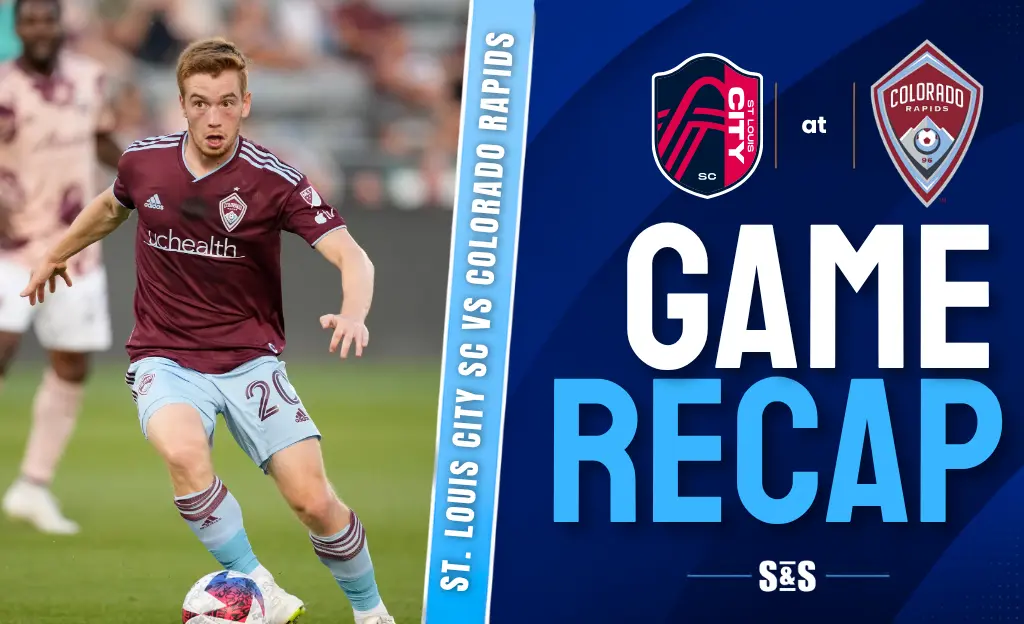

Table of Contents
The St. Louis CITY SC vs Colorado Rapids recap starts with the exact result St. Louis moneyline bettors needed: St. Louis CITY SC 1, Colorado Rapids 0. ScoresAndStats made St. Louis CITY SC moneyline at +105 the best bet in the preview, and the home side eventually cashed that ticket with a late Tomas Ostrak goal.
The pregame expectation was built around St. Louis creating repeatable pressure at home through Marcel Hartel, Eduard Löwen, energetic wide runs, and improved ball recovery. The preview did not frame the selection as a runaway favorite spot. It treated St. Louis as a modest plus-money home side with enough pressure volume to justify the price, as long as the market stayed playable and the lineup did not remove key pieces.
The match delivered the right side, but not the projected 2-1 scoring shape. Colorado went down to 10 men early after Rob Holding’s 12th-minute red card, yet St. Louis still had to wait until the 83rd minute for Ostrak’s breakthrough. For bettors comparing soccer prices through broader league odds analysis, this was a strong reminder that a good moneyline bet can cash while the total and handicap story remain much tighter than expected.

Find value before the match starts.
Check our picks.
St. Louis CITY SC vs Colorado Rapids Match Recap
| Match Detail | Result |
|---|---|
| Final Score | St. Louis CITY SC 1-0 Colorado Rapids |
| Goal | Tomas Ostrak 83’ |
| Red Card | Rob Holding, Colorado Rapids, 12’ |
| Venue | Energizer Park, St. Louis, Missouri |
| Key Betting Result | St. Louis CITY SC moneyline at +105 won |
| Best Market Result | St. Louis moneyline and under 2.5 goals |
St. Louis entered with the home-side pressure profile the preview wanted, but the match became more complicated than a simple man-advantage story. Holding’s red card in the 12th minute put Colorado in a difficult position almost immediately. From that point forward, the Rapids had to defend deeper, protect central lanes, and avoid letting the match become a steady St. Louis wave.
That early red card helped St. Louis from a territory standpoint, but it also changed the rhythm. Colorado’s attacking case was built around Paxten Aaronson’s movement, Rafael Navarro’s central occupation, and moments in transition. Once reduced to 10 men, the Rapids had less freedom to chase the match aggressively. They had to survive first, counter second, and hope the longer St. Louis failed to score, the more pressure would shift onto the home side.
For most of the match, that survival plan worked. St. Louis had the extra player and the home crowd, but the breakthrough did not come quickly. That mattered for bettors because the preview’s moneyline angle was alive, while the over 2.5 goals market started losing time with every scoreless phase. A red card can open a match, but it can also make the short-handed team more compact and more willing to accept long stretches without the ball.
Ostrak finally settled the market in the 83rd minute. His late strike from around the edge of the area bounced in off the post and gave St. Louis the 1-0 lead. That goal rewarded the preview’s moneyline position, punished Colorado moneyline and draw backers, and prevented the match from becoming a painful home-favorite miss despite the long man advantage.
This St. Louis CITY SC vs Colorado Rapids recap is therefore not just a celebration of the correct side. It is a lesson in patience, price, and market fit. St. Louis were the right moneyline side because they had the home pressure and eventually found the winner. But bettors who expected the red card to automatically create a multi-goal win or an easy over learned a harder lesson.
Key Match Factors That Explain the Betting Result
The most important betting factor was the timing of the breakthrough. St. Louis had the man advantage from the 12th minute, but the winning goal did not arrive until the 83rd. That delayed payoff created two separate betting stories: the moneyline was eventually right, while the total goals market never received the early scoring sequence it needed.
Colorado’s red card shaped the tactical picture. The Rapids were forced into a more conservative match, and that helped keep the score low even while St. Louis pushed for the winner. From a betting standpoint, the dismissal increased St. Louis’ control but also gave Colorado every reason to protect the box, slow the tempo, and make the home side solve a crowded defensive structure.
- Rob Holding’s 12th-minute red card gave St. Louis a long man advantage and shifted territory toward the home side.
- Colorado stayed organized enough to keep the match scoreless until the final 10 minutes.
- Tomas Ostrak’s 83rd-minute goal turned the St. Louis moneyline into a winning ticket.
- The 1-0 final kept the match under 2.5 goals despite the early red card and home pressure.
The list shows why the betting result should be graded carefully. St. Louis backers were right, but not because the match became easy. Colorado defended long enough to make the favorite work, and the decisive goal arrived late enough to remind bettors that even a good edge can require patience.
That is the kind of soccer betting lesson that matters beyond one MLS match. In markets covered by Bundesliga odds predictions, a red card, home edge, or form advantage can shift probability without guaranteeing a comfortable scoreline. St. Louis had the right side. The total told a different story.
Betting Market Results
| Market | Betting Takeaway |
|---|---|
| St. Louis CITY SC Moneyline +105 | Won after Ostrak’s 83rd-minute goal delivered the 1-0 result |
| Colorado Rapids Moneyline +225 | Lost after Colorado played most of the match with 10 men |
| Draw +270 | Lost when St. Louis finally broke through late |
| Under 2.5 Goals +138 | Won because the match finished with one total goal |
The betting market result was clean for the preview’s main side. St. Louis moneyline at +105 won, and that plus-money price was the right part of the board. The preview estimated a modest edge, not a certainty, and the final score showed why that language mattered. St. Louis needed nearly the entire match to cash.
The total goals market moved in the opposite direction. Over 2.5 goals was priced as the favorite in the preview snapshot, but the 1-0 final rewarded under bettors instead. That is the key market split. St. Louis were correctly identified as the more likely winner, but the match did not become open enough to support the over. Colorado’s red card reduced their attacking ambition and gave them a clear reason to defend compactly.
For bettors reviewing other soccer slates through Copa America odds predictions, this is the important comparison: side and total markets can tell different truths. A team can be the right side to win while the game environment still leans low-scoring. St. Louis made the moneyline work, but Colorado’s defensive survival kept the total down.
HEY, WATCH THIS!
Go Beyond the Final Score With Deeper Soccer Market Context
Explore More Soccer Analysis
Game Analysis
The game analysis starts with St. Louis’ pressure and Colorado’s adjustment. The preview expected St. Louis to create repeatable attacking pressure through Hartel, Löwen, wide movement, and ball recovery. Holding’s early red card made that pressure even more likely, but it also simplified Colorado’s defensive task. The Rapids no longer needed to match St. Louis phase for phase. They needed to block, delay, and survive.
That is why the match remained scoreless for so long. Playing against 10 men does not automatically produce clean shots if the short-handed team accepts a lower block and protects the penalty area. Colorado gave up territory but fought to keep the most dangerous spaces crowded. The longer that approach held, the more the match tested St. Louis’ patience.
St. Louis deserve credit for not letting frustration turn into poor decisions. A home side with a man advantage can become too direct, too rushed, or too vulnerable to counters. St. Louis kept pushing until the late goal arrived. Ostrak’s strike was the final product, but the larger point is that the home side kept enough control to make the late winner possible.
Colorado’s performance also deserves a measured reading. The Rapids lost, and their betting side failed. But going down a man in the 12th minute changes any away match. Their ability to stay level until the 83rd minute made the draw price live deep into the match and gave under bettors a strong position. The issue is that defending for that long leaves almost no margin for one mistake or one high-quality finish.
That is exactly what happened. Ostrak’s goal did not create a blowout. It decided a tight match. For bettors, that distinction matters because it separates the correct side from an overly aggressive interpretation of the result. St. Louis were right as a moneyline play. Larger handicap expectations would have needed a much earlier goal.
Why St. Louis Cashed for Moneyline Bettors
St. Louis cashed for moneyline bettors because the preview’s core assumption held: the home side had more repeatable paths to the winning goal. That did not mean the match was comfortable. It meant that over 90 minutes, St. Louis were more likely to create the decisive moment than Colorado.
The +105 price was important. This was not a heavy favorite laying a big number. It was a plus-money home side with a working estimate above the implied probability. That kind of edge can be valuable even when the final score is narrow. The goal is not to win by style points. The goal is to beat the price.
Holding’s red card strengthened the St. Louis side during the match, but bettors should not rewrite the entire handicap as if the red card was the only reason the pick worked. The preview already pointed to St. Louis’ recent form, pressure volume, and Colorado’s lower away shot profile. The dismissal amplified those advantages, but St. Louis still needed to find the finish.
Ostrak provided it. The 83rd-minute timing made the moneyline feel stressful, but late goals count the same at the betting window. St. Louis backers were rewarded because the home side kept the match tilted long enough to create the winner, then protected the clean sheet through full time.
The future lesson is about price discipline. St. Louis can remain playable when the market gives them a fair home number and the matchup points toward pressure volume. If the market overreacts to their unbeaten run or this result, the value can disappear. The team name is not the bet. The number is.








Why the Under Survived the Red Card
The under survived the red card because Colorado’s response was defensive, not chaotic. Some bettors see an early dismissal and immediately expect goals. That can happen, but it depends on how the short-handed team reacts. Colorado reacted by protecting the box and making St. Louis work through traffic.
The match also lacked the early St. Louis goal that would have forced Colorado to open up. If St. Louis had scored shortly after the red card, the game might have stretched. Instead, the longer the score stayed 0-0, the more logical it became for Colorado to accept a compact structure and try to steal a point.
That match state was perfect for under bettors. St. Louis had more of the initiative, but Colorado’s limited attacking ambition reduced the number of open exchanges. The Rapids could not commit too many players forward because one St. Louis counter or set-piece could finish the match. The result was pressure without scoring volume.
Ostrak’s late goal threatened the draw but not the under. Once the match reached the 83rd minute at 0-0, under 2.5 goals was already in strong shape. St. Louis scoring once did not change that unless the final minutes became chaotic. They did not. The home side managed the closing stretch and finished with the clean sheet.
That lesson translates well to other soccer markets, including tournament-style pricing covered in Golden Boot odds analysis. Finishing moments matter, but game state controls totals. One team can dominate territory and still leave the total under if the opponent’s structure keeps the match from opening.
HEY, WATCH THIS!
Go Beyond the Final Score With More Global Soccer Betting Context
Explore More Soccer Analysis
What the Stats Say for Future Matchups
The strongest repeatable signal is St. Louis’ ability to keep pushing at home. The goal arrived late, but the pressure did not disappear. That matters for future moneyline and draw-no-bet markets, especially when St. Louis are priced reasonably and facing an opponent that struggles to sustain away possession.
The fragile signal is margin. A 1-0 win with a man advantage for most of the match should not be treated as proof that St. Louis are automatically a strong handicap side. They cashed the moneyline, but they did not create scoreboard separation. Future bettors should be careful before moving from St. Louis to larger spreads unless the matchup gives them clearer finishing advantages.
- St. Louis moneyline positions remain attractive when the price stays fair and the matchup supports home pressure.
- St. Louis handicap bets need caution unless the attack shows earlier finishing or the opponent is more fragile.
- Colorado underdog positions require better discipline because an early red card can destroy the away game plan.
- Unders remain live when a short-handed team defends compactly and the favorite cannot score early.
The best future St. Louis angle is controlled moneyline betting. If the market offers plus money or a reasonable home price against a lower-volume away team, St. Louis can still be playable. The danger is chasing margin based on one late winner. That would be the wrong lesson from this match.
For Colorado, bettors need to watch discipline and away shot creation. The Rapids defended bravely after the red card, but the dismissal removed much of their attacking path. If Colorado are priced as an away underdog again, bettors should ask whether they can keep 11 players on the field, create enough transition danger, and avoid spending the match in survival mode.
The St. Louis CITY SC vs Colorado Rapids recap closes with a precise betting takeaway. St. Louis CITY SC 1-0 Colorado Rapids rewarded the preview’s +105 moneyline because the home side eventually turned pressure into the winning goal. But the match also warned bettors not to assume a red card guarantees goals or margin. St. Louis were the right side. The under was the cleaner total. Future MLS bettors should remember both parts before chasing the next favorite.