NFL Previews
  MLB Previews
  NBA Previews
  NHL Previews
  Soccer Previews
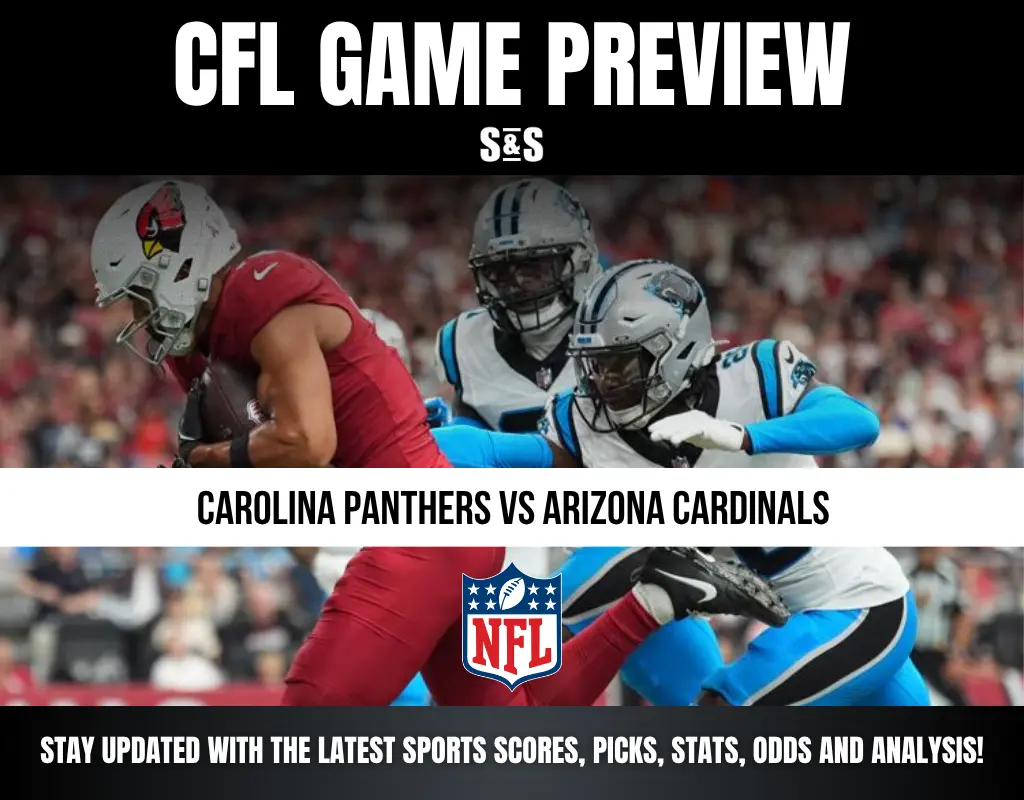

Table of Contents
Carolina Panthers vs Arizona Cardinals Picks, Predictions and Odds: Which backup plan is more trustworthy?
The Carolina Panthers and Arizona Cardinals open the 2026 NFL preseason in the Hall of Fame Game on Thursday night in Canton. The central handicap is not about the regular-season starters, because Carolina has announced that its established first unit will sit and Arizona is expected to protect most of its veteran core. It is about quarterback sequencing, offensive-line depth and which coaching staff can create a cleaner environment for reserve players. Kenny Pickett brings NFL experience to Carolina’s opening series, while rookie Carson Beck is scheduled to start for Arizona and may receive the longer evaluation window. The market has kept the spread narrow and the total low, which is appropriate for a game defined by conservative play calling and uncertain second-half personnel.
Game Info: How much does the neutral-site preseason setup matter?
- Game: Carolina Panthers at Arizona Cardinals
- League/Stage: NFL Hall of Fame Game, preseason opener
- Date and kickoff: Thursday, August 6, 2026, 8:00 p.m. ET
- Venue: Tom Benson Hall of Fame Stadium, Canton, Ohio
- Designation: Arizona is the listed home team at a neutral site
- Expected starting quarterbacks: Kenny Pickett for Carolina; Carson Beck for Arizona
- Rest context: Both teams receive an extra preseason game and are limiting established starters
- Weather: Warm conditions with a chance of thunderstorms; any active cell or wet field would reinforce conservative offense
The neutral field removes a meaningful home advantage. More important is the extra-game context: coaches can evaluate roster battles without asking front-line players to absorb unnecessary snaps. That pushes the handicap toward quarterback depth, center-quarterback exchanges, protection communication and special teams rather than regular-season power ratings.
Carolina Panthers vs Arizona Cardinals Odds: Is the low total already efficient?
| Team | Moneyline | Point Spread | Game Total |
|---|---|---|---|
| Carolina Panthers | -125 | -1.5 (-110) | Over 35.5 (-110) |
| Arizona Cardinals | +105 | +1.5 (-110) | Under 35.5 (-110) |
These prices were checked Thursday morning, August 6. Carolina’s moneyline implies a break-even probability of 55.6%, while Arizona’s +105 price implies 48.8% before removing the market margin. The spread has generally sat near Panthers -1.5, and the total has remained around 35.5. Bettors can confirm the current number on the NFL scores and odds board because preseason limits and lineup announcements can move quickly.
Head-to-Head and Series History: Does prior history carry any weight here?
Recent Panthers-Cardinals regular-season meetings offer little predictive value for this event. The venue is neutral, the quarterback rotations are different, and both staffs are evaluating the bottom half of expanded preseason rosters. Even scheme familiarity is limited because the playbooks will be intentionally basic. Historical franchise results should not be used as a substitute for current playing-time information.
The useful series point is structural rather than statistical: Hall of Fame Games often turn on depth, penalties and special teams because neither team is building a full regular-season game plan. That makes current roster competition and coaching priorities far more relevant than the score of any prior Carolina-Arizona meeting.
Carolina Panthers Recent Form: What matters before the regular season starts?
Carolina enters this game after an offseason and training camp rather than a current run of competitive results, so conventional recent-form analysis is unavailable. The responsible substitute is to evaluate what the club has disclosed about usage. Head coach Dave Canales has said established starters will not play, though players involved in genuine starting competitions may receive work. That distinction matters because it creates a mixed unit rather than a normal second team. Pickett should operate with enough veteran understanding to organize the huddle, identify pressure and avoid unnecessary risk, but he may not share the field with the Panthers’ best protection or receiving options.
The Panthers’ strongest form signal is therefore operational. Clean exchanges, manageable third downs and field position are more valuable than explosive ambition in this setting. Carolina’s reserve defense also has a clear assignment against a rookie quarterback: disguise basic coverages before the snap, rally to checkdowns and force long drives. That approach supports a modest scoring projection, although backup-on-backup tackling and penalty variance remain significant.
Arizona Cardinals Recent Form: Can the new depth offense operate cleanly?
Arizona is also starting from training-camp evidence. Beck has been working largely with the third unit since veteran Jacoby Brissett returned to full team work, and the Cardinals are using this game to evaluate his command. His age and extensive college experience should help with the mechanics of the operation, but the speed of NFL pressure and the quality of reserve protection are new variables. Arizona is unlikely to ask him to solve the game with aggressive downfield throws. The more realistic plan is quick-game passing, defined reads and a run-heavy menu that keeps the offense on schedule.
The Cardinals’ second- and third-unit performance in camp has encouraged the staff, but game conditions are different. Communication penalties, protection busts and negative runs can quickly create third-and-long. Arizona’s path to efficient offense is to avoid those situations and use Beck’s planned workload to build rhythm. If the rookie settles early, the Cardinals could own more possession time than the market expects; if the pocket becomes muddy, drives may end before reaching scoring range.
Quarterback and Offensive Matchup: Can experience beat extended rookie reps?
Start with the quarterback and the protection in front of him. Pickett has already seen regular-season NFL defenses and should be more comfortable changing a protection or taking the profitable checkdown. That is Carolina’s clearest early advantage. The limitation is playing time. The fifth-year quarterback may only lead a small number of possessions before undrafted rookie Haynes King takes over, and the value of experience declines once the game moves to the deeper roster.
Beck is the more important evaluation piece for Arizona, which could give him a longer runway. He has the arm talent to attack intermediate windows, but the Cardinals’ stated goal is a clean operation and correct decisions. That points toward conservative early-down throws and fewer risky concepts. Both offenses should lean on the run to protect reserve tackles and centers. The matchup favors whichever line avoids false starts and interior leakage, not whichever team has the better regular-season skill group sitting on the sideline.
Injuries, Projected Starters and Availability: Which absences reshape the rotation?
Carolina’s confirmed approach can be monitored through the Panthers injury report, while Arizona’s late changes belong on the Cardinals injury report. The key is not merely who is unavailable, but how the absences change the sequence of quarterbacks, tackles, edge defenders and return specialists.
Carolina Panthers Key Projected Starters
- Kenny Pickett, QB — confirmed starter; expected limited preseason work
- Haynes King, QB — projected to handle a meaningful share after Pickett
- Monroe Freeling and Rasheed Walker, OT — listed atop the initial tackle depth chart but regular starters may be protected
- Jonathon Brooks, RB — listed behind Chuba Hubbard and part of the reserve evaluation group
- Reserve edge and interior defenders — expected to carry most defensive snaps
Arizona Cardinals Key Projected Starters
- Carson Beck, QB — confirmed starter and primary rookie evaluation
- Kedon Slovis, QB — candidate for extended reserve work later in the game
- Jacoby Brissett and Gardner Minshew II, QB — unlikely to play based on the announced rookie start and veteran protection plan
- Third-unit offensive line — central to Beck’s ability to stay on schedule
- Reserve coverage and return units — important in a low-total field-position game
Key Matchup Factors: Which second-unit advantage is most repeatable?
The first factor is early quarterback stability. Pickett should give Carolina the cleaner opening script, but the advantage may last only a few possessions. The second is reserve offensive-line communication. A single free rusher or mishandled stunt can end a preseason drive, especially when coaches prefer not to expose quarterbacks to extended dropbacks. The third is field position. Returns, punt coverage and penalties can create scoring chances without either offense sustaining a long march.
Weather is the fourth factor. Thunderstorm risk matters more than temperature because a wet ball and delayed warm-up would increase exchange and kicking uncertainty. Finally, coaching intent matters. Both teams want usable evaluation tape, not a complex tactical victory. Expect basic fronts, limited blitz volume and offense designed to test execution. That environment supports a close game and modest pace, but the late fourth quarter remains vulnerable to defensive busts as the deepest reserves play together.

Ready for today’s action?
Browse picks for today’s games before they start.



Alternative Bets: Is there a cleaner way to attack preseason variance?
First Half Under 18.5 at -110
The first-half under isolates the period with the most structured quarterback plans and the strongest reserve personnel. Pickett’s experience should reduce reckless mistakes, while Beck’s assignment is to make sound reads rather than chase explosive plays. The risk is a short field created by a turnover or return. The market is playable only at 18.5 or better and standard pricing.
Arizona Cardinals +2.5 at -125
Buying Arizona through the key preseason margin of two points is a conservative way to express the expectation of a one-score game. It becomes unattractive if the price rises beyond -125 because the extra protection is not worth an unlimited premium in a volatile exhibition.
Best Bet: Does Carolina have enough early-game stability?
Best Bet: Carolina Panthers -1.5 at -110
At the Thursday-morning price, -110 requires a 52.4% win rate against the spread. My estimate is 54%, with Carolina playable up to -2 at -110 and no longer attractive at -2.5. The first reason is quarterback sequencing: Pickett offers the most proven early-game command in the matchup and should give Carolina a better chance to avoid wasted possessions. The second is defensive structure. Carolina can simplify the assignment for its reserve defense by keeping the ball in front of Beck and forcing the rookie to complete a series of correct decisions. The third is Arizona’s likely reliance on a developmental offensive line and third-unit timing, which raises the probability of sacks, penalties and stalled drives.
The expected script is Carolina creating a small early lead, then trying to protect field position while both teams rotate deeper into the roster. The serious counterargument is that Arizona may give Beck more snaps than Carolina gives Pickett, allowing the Cardinals to develop continuity while the Panthers turn the offense over to an undrafted rookie. That late-game uncertainty keeps the edge small. A good matchup still needs a playable number, and the recommendation should be passed if Carolina moves beyond -2.
Final Prediction: Who handles the late-game uncertainty better?
Final Score Prediction: Carolina Panthers 20, Arizona Cardinals 17
Carolina’s veteran opening quarterback and more stable early operation are enough for a narrow lean, but this should remain a low-margin preseason game. Expect conservative scripts, frequent substitutions and scoring chances driven as much by field position as by sustained offense. The best bet is Panthers -1.5 at -110, playable only through -2. The primary risk is Arizona receiving a longer and more productive stint from Beck while Carolina’s deeper quarterback rotation struggles to finish drives.